Agentic AI in Science Will Win on Workflow Before Breakthroughs

The strongest argument for agentic AI in science is not that it can write a passable literature review. It is that modern research is already a coordination problem, and coordination is exactly where software tends to win first.
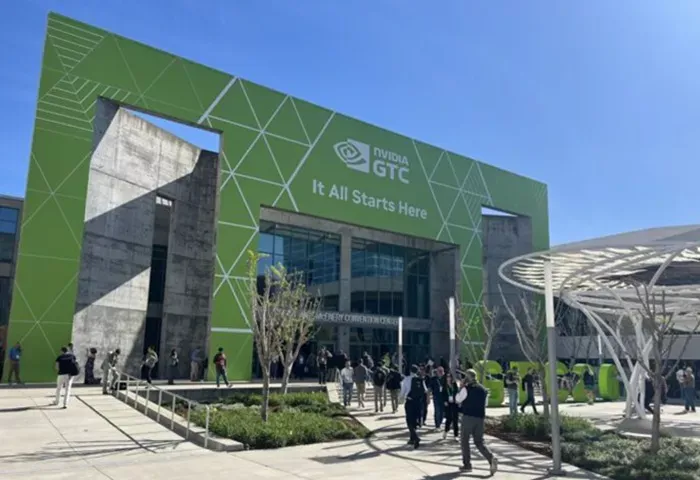
That is the useful lens for reading the scientific-AI thread running through NVIDIA GTC 2026. A lot of public discussion around AI in research still swings between two lazy poles: either breathless claims about automated discovery, or equally lazy dismissal that models hallucinate and therefore science is safe from automation. Both miss the operational reality inside laboratories and research organizations. Scientific work is not just one brilliant insight. It is an ugly pipeline of searching, filtering, hypothesis generation, protocol design, experiment execution, instrumentation, reproducibility checks and documentation. Even modestly capable agents can matter if they compress enough of that pipeline.
The Yuyjo report on Jensen Huang's GTC remarks captures the broad claim: agentic systems are beginning to reshape scientific research, with examples ranging from autonomous literature review to laboratory integration. More useful corroboration came from industry coverage such as GEN, which highlighted many of the same actors and a telling line from NVIDIA's Rory Kelleher: scientists who use AI effectively are likely to outpace those who do not. That sentence will annoy some researchers. It is also probably right.
The conference examples illustrate why. Andrew Beam of Lila Sciences drew a clear distinction between domains like mathematics, where outputs can be checked easily, and scientific discovery, where validation still depends on experiments. That is not an argument against AI. It is an argument for coupling AI more tightly to empirical systems. Marinka Zitnik of Harvard pointed to the data problem from another angle: too much life-science reasoning still leans on a narrow slice of published literature and overstudied genes, while valuable information sits fragmented across molecular structures, clinical datasets and experimental context. If you think of modern science as a retrieval, synthesis and validation challenge under severe data fragmentation, agentic systems start to look less like magic and more like workflow infrastructure.
The opportunity is in the handoff between digital reasoning and physical experiments
The most interesting projects mentioned around GTC are not the ones that merely summarize papers faster. They are the ones trying to bridge digital models and physical lab work. Edison Scientific's Kosmos is described as an autonomous AI scientist that can run literature review, data analysis and parallel research tasks. LabOS, from Stanford and Princeton researchers, integrates extended reality, wearables, robotics and AI agents to support real-time lab work while attacking the reproducibility problem. Latent Labs' Latent-Y is pitched as an agent able to design therapeutic antibodies directly from text prompts, with a reported 67 percent lab-validated binder success rate across tested targets. Dyno Therapeutics' Psi-Phi suite combines generative models with filtering systems to improve protein design outcomes.
Some of these claims will age well. Some will not. That is normal. What matters is the pattern. The center of gravity is moving from "AI helps me read" to "AI helps me run the loop." That loop includes planning, instrument interaction, simulation, candidate generation, filtering and experiment prioritization. Once you see the field that way, the likely near-term win is not fully autonomous Nobel-worthy discovery. It is a measurable reduction in wasted cycles: fewer dead-end experiments, faster candidate screening, better documentation, more reproducible protocols and broader exploration of the design space before a human commits scarce wet-lab resources.
This is where a lot of mainstream commentary still undershoots. Scientific AI is not valuable only when it replaces a scientist's insight. It is valuable when it improves the throughput and quality of the system around that insight. Good labs already know that a large share of scientific progress comes from tooling, instrumentation and process discipline. Agentic AI belongs in that lineage if it works.
The hidden battle is over data quality, not model cleverness
There is also a harder truth beneath the demo layer: scientific agents will be limited less by reasoning benchmarks than by the quality and accessibility of the underlying data. Zitnik's point about narrow biological focus is crucial. If the input corpus is biased toward familiar genes, popular pathways or well-funded diseases, then the agent can become a very efficient machine for rediscovering the current consensus with fancier prose. Likewise, if experimental metadata is missing, protocols are inconsistently recorded and negative results stay buried, even a very capable agent will optimize on partial truth.
That means the practical bottleneck is institutional. Labs and biotech organizations that want real value from agentic systems need better data plumbing, not just better model subscriptions. Standardized experimental records, clean ontologies, instrument integration, retrieval across private and public datasets, and rigorous evaluation against real outcomes matter more than whichever frontier model is having a good quarter. In that sense, NVIDIA's platform angle is smart. By talking about systems, infrastructure and real-world integration instead of only model scale, it is aligning itself with where production value is actually created.
There is a competitive implication too. Scientific organizations that adopt agentic tooling early will not merely save time. They will generate better proprietary datasets from the feedback loop of model suggestion to experiment to result. That creates compounding advantage. A lab that can run more high-quality cycles per week is not just faster. It becomes a better data factory, which in turn makes its next models and agents better. Kelleher's warning was blunt because the economics are blunt.
What research teams should do now
If you lead a research or platform team, start with narrow loops where validation is measurable. Literature triage, protocol drafting, reagent selection, candidate ranking and experiment summarization are good early targets because humans can check them and the cost of failure is bounded. Do not begin with grand autonomy narratives. Begin with cycle-time reduction and reproducibility gains.
Second, invest in instrumentation and auditability before autonomy. Every agent suggestion that touches a scientific workflow should be logged with provenance, source retrieval and downstream experimental outcome when available. If you cannot trace why the system recommended a sequence, a target or a protocol change, you will not trust it when the stakes rise.
Third, treat the wet-lab interface as the real product surface. The hard part is not getting a model to sound smart about biology. The hard part is connecting model outputs to robotics, lab information systems, assay results and researcher habits without creating a brittle mess. The companies and labs that solve that handoff will matter more than the ones with the most polished demo videos.
The deeper editorial takeaway from GTC is that science may become one of the first domains where agentic AI proves itself by being gloriously unglamorous. Not by replacing researchers in a cinematic flash, but by shrinking the administrative, cognitive and coordination tax that slows real discovery. If that happens, the winners will not be the loudest model labs. They will be the organizations that combine good science, good data and good systems engineering. In other words, the same boring virtues that usually win, now with more GPUs in the loop.
Sources: Yuyjo, GEN, GEN, Business Wire