Claude Code 2.1.153 Fixes the Boring Surfaces That Become Incidents

The most important Claude Code release this week is not the one with the flashiest feature. It is the one that fixes the surfaces nobody demos and everybody depends on once coding agents become part of daily engineering work: MCP policy inheritance, gateway credentials, background-session recovery, update channels, and the part of subagent behavior where “same rules as the parent” has to mean exactly that.
Claude Code 2.1.153, published May 28, is a maintenance release in the best sense of the term. The changelog is long, operational, and mostly allergic to marketing. That is why it matters. The future of coding agents will not be decided only by benchmark scores or whether a model can one-shot a React component. It will be decided by whether the runtime preserves authority boundaries when agents delegate, whether credentials go where they are supposed to go, and whether background jobs can be trusted not to drop work into some undocumented corner of the filesystem.
The subagent policy bug is the real headline
The highest-signal fix is that subagent MCP servers declared in Agent tool frontmatter now respect --strict-mcp-config, --bare, remote mode, enterprise managed MCP config, and managed-settings MCP server allow/deny policies. Anthropic also fixed the related edge case where --strict-mcp-config could strip inline mcpServers from explicitly passed agent definitions through --agents or SDK agents, and blocked subagent MCP servers now surface a visible warning.
That sounds like plumbing because it is plumbing. It is also the difference between an actual permission model and a permission model that only applies to the first actor in the call graph. Once a coding assistant can delegate work to subagents, policy inheritance becomes non-negotiable. If the parent session is launched with strict MCP configuration or enterprise-managed allow/deny rules, a delegated agent cannot be allowed to regain MCP access through frontmatter or inline configuration. Least privilege that evaporates at the first delegation boundary is not least privilege. It is a costume with a lanyard.
For teams using MCP to connect Claude Code to issue trackers, monitoring dashboards, databases, Figma, Slack, Gmail drafts, or internal systems, this is the control-plane layer that deserves the most scrutiny. MCP turns useful context into callable tools. That is powerful. It is also exactly why MCP configuration has to behave like production policy, not like a convenience file that every subagent can reinterpret.
Gateway credentials are not a footnote
The release also fixes a regression where a custom API gateway could receive the user’s Anthropic OAuth credential instead of the gateway’s own token. In a consumer CLI, that might look like an embarrassing auth bug. In an enterprise deployment, it is an incident review waiting for a timeline.
Many organizations route model traffic through internal gateways for logging, data residency, policy enforcement, routing, spend attribution, or approval workflows. Those gateways should receive credentials scoped for the gateway. They should not receive a user’s Anthropic OAuth credential by accident. The interesting practitioner takeaway is not simply “upgrade.” It is that agent runtimes now need the same boring auth-boundary tests teams already expect from API gateways, service meshes, and internal developer platforms. Token routing, credential scope, audit logs, and failure behavior all belong in the regression suite.
If your organization uses a custom gateway with Claude Code, treat 2.1.153 as a prompt to verify—not assume—your boundary behavior. Check gateway logs for credential shape, token audience, and unexpected auth paths around the affected window. Rotate credentials if policy requires it. More importantly, add a test that would catch this class of regression next time. Agent runtime upgrades are becoming platform upgrades, not editor-plugin updates.
Background agents are becoming job runners
The background-agent fixes are less obviously security-coded, but they may matter just as much for trust. Claude Code now continues a response in the background session when /bg is used while Claude is responding, instead of dropping it. The release fixes stale daemons, stale session markers, temp files in $CLAUDE_JOB_DIR triggering sensitive-file permission prompts, deleted-working-directory recovery, keyboard shortcuts in running background sessions, terminal repaint problems, tmux clipboard failures, zombie Code-tab entries, and background session rename behavior.
One fix deserves special attention: the Agent tool with subagent_type: 'claude' no longer runs in an undocumented temporary worktree that could silently discard outputs written to gitignored paths. That is not a cosmetic bug. If an agent writes artifacts, generated files, logs, migrations, or build outputs somewhere the user reasonably expects to persist, silently losing them destroys trust. Developers can forgive a model for being wrong. They are less forgiving when the harness lies about where work happened.
This is the operational shift hiding inside the changelog. Backgrounding turns Claude Code from an interactive assistant into a small job runner. Job runners need predictable working directories, resume behavior, output persistence, permission semantics, and recovery messages that do not require archaeology. The model can be brilliant, but if the runtime drops responses or loses gitignored outputs, the system is not safe for unattended work.
The unglamorous rollout checklist
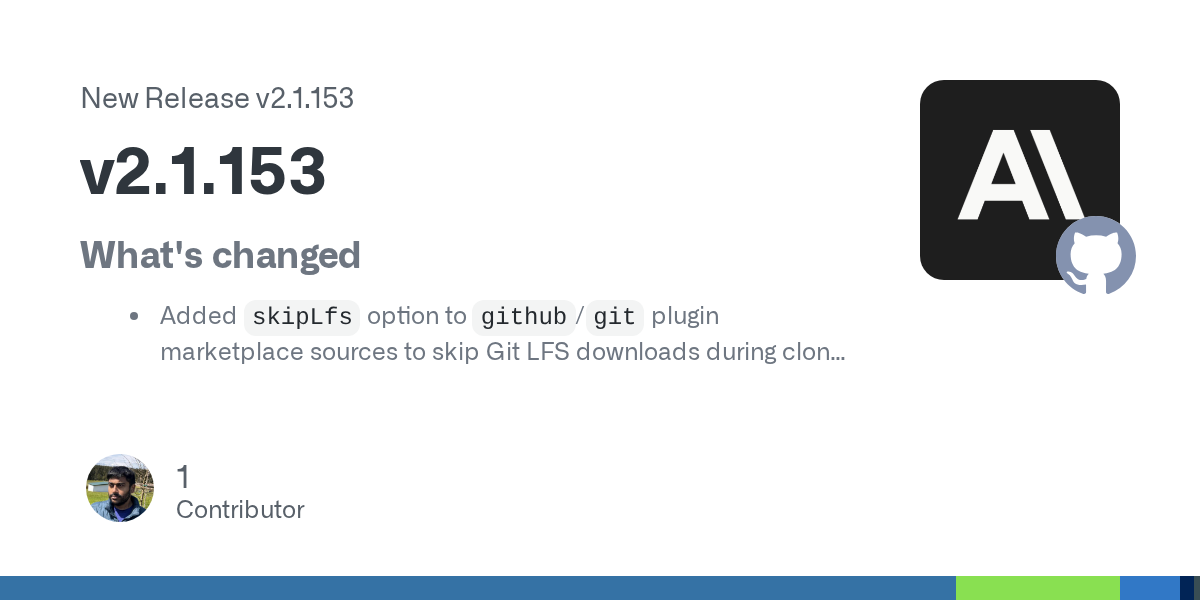
Claude Code 2.1.153 also includes smaller but useful fixes: stateful MCP servers without the optional GET SSE stream no longer reconnect-loop on tools/list; MCP server and connector authentication notices are combined into one startup message; plugin marketplace sources can set skipLfs for GitHub or git sources; /doctor reports the last update attempt; global npm installs that cannot auto-update now get a one-time notice; claude update honors the configured release channel; resuming by transcript file path no longer causes multi-GB memory use on machines with many sessions; and /model now saves the picker selection as the default for new sessions, while s switches only the current session.
None of that belongs on a keynote slide. All of it belongs in the category of things that determine whether a tool survives contact with real engineering teams. Update channels must not jump unexpectedly. Resume must not blow up memory. MCP reconnect loops must not turn one flaky server into a terminal tax. Defaults need to mean the same thing in the CLI and IDE. These are the boring seams where developer trust accumulates or leaks away.
The rollout path is straightforward. Upgrade a non-critical machine first. Test subagent workflows that declare MCP servers in frontmatter or SDK agent definitions. Confirm managed allow/deny policy still blocks what you expect, and verify blocked servers produce visible warnings. If you run a custom gateway, inspect token routing rather than trusting the changelog as a control. If you rely on background agents, test /bg, attach/resume, worktree outputs, clipboard behavior in tmux if relevant, and recovery from deleted or moved working directories.
The editorial read is simple: this is a control-plane maintenance release, and that is a compliment. Mature coding-agent tools ship boring fixes because boring bugs are where agent governance breaks. The industry likes to talk about prompt injection because it is legible and dramatic. The incidents will just as often come from policy not propagating to a subagent, a gateway receiving the wrong credential, an update channel doing the wrong thing, or a background job putting work somewhere nobody can recover it.
Claude Code 2.1.153 does not make agents feel more magical. It makes the harness less surprising. For teams moving coding agents from personal productivity toy to shared engineering infrastructure, that is the more valuable release note.
Sources: Claude Code GitHub release v2.1.153, Claude Code changelog, Claude Code MCP docs