Codex CLI 0.132.0 Is a Runtime Release, Not a Demo Reel

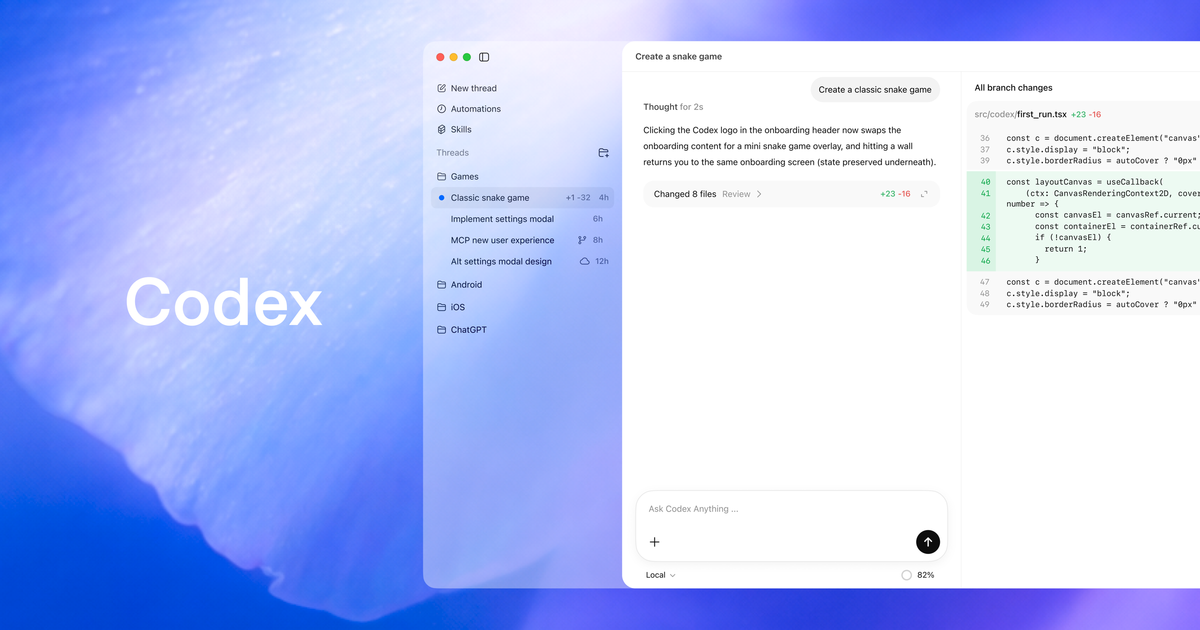
Codex 0.132.0 is the kind of release that looks small from the outside and matters precisely because it sands the runtime seams users hit every day.
OpenAI shipped Codex CLI 0.132.0, a release aimed at making Codex easier to operate from scripts, SDKs, remotes, and long-running sessions. The headline features are first-class Python SDK authentication, simpler turn APIs, structured-output support for resumed codex exec runs, faster TUI startup, standard Codex auth for remote executor registration, and higher-fidelity image handling in app-server turns. The through-line is boring in the right way: Codex is becoming less of a clever terminal toy and more of a controllable developer runtime.
Runtime polish is product strategy
- Install command from the official changelog:
npm install -g @openai/[email protected]. - Python SDK auth now supports API key login, ChatGPT browser login, device-code flows, account inspection, and logout APIs.
- Python turn APIs now accept plain strings for text-only workflows; handle-based runs return a richer
TurnResultwith collected items, timing, and usage data. codex exec resumenow supports--output-schema, letting automations preserve session context while still forcing structured JSON output.- TUI startup batches terminal capability probes instead of serially waiting before the first interactive frame.
- Remote executor registration can use standard Codex auth instead of a separate registry credential flow.
- App-server turns preserve requested image fidelity, including original-resolution local images, across user inputs and image-producing tools.
- Bug fixes stop goal continuations when they hit usage limits or repeated blockers, preventing token-burning loops.
- Multi-session TUI fixes keep in-progress MCP calls marked active during replay and route elicitation replies back to the requesting thread.
- Remote sessions now keep websocket connections alive and show repo-relative diff paths instead of
/tmp/...-prefixed paths. - Windows fixes make
codex doctordetect npm-managed installs correctly and remove a separate VC++ runtime DLL dependency from MSVC release binaries. - The GitHub compare view shows 49 commits, 347 files changed, and 16 contributors between 0.131.0 and 0.132.0.
HN Algolia returned 0 matching stories for the exact “Codex CLI 0.132.0” query during the research run. That is expected: SDK auth, schema-preserving resume, websocket keepalives, and Windows installer polish do not go viral. The practitioner reaction will show up in bug reports and automation repos: fewer stuck sessions, fewer broken remote diffs, fewer “why did this loop until the limit?” incidents.
This release matters because the center of gravity for coding agents is moving from “can it write a patch?” to “can I safely compose it into a workflow?” codex exec resume --output-schema is a good example. A one-shot agent result is easy to demo; a resumed session that keeps context but still emits machine-validated JSON is what CI jobs, triage bots, migration tools, and internal dashboards actually need. Structured output is not cosmetic here. It is the contract between agent behavior and downstream automation.
The Python SDK work points in the same direction. First-class auth and simpler turn APIs reduce the amount of glue code teams need to write before they can embed Codex into internal tools. That is useful, but it also raises the governance bar. Once Codex is callable from scripts and services, platform teams need to know which identity is used, how logout/revocation works, where usage is attributed, and whether SDK runs have the same approval and permission semantics as the TUI.
The goal-loop fix is the quiet operational win. Agent systems fail in boring ways: they retry a blocker, keep a dead websocket open, lose track of which thread requested an elicitation, or display a diff path that makes review harder. Each failure looks small until it burns tokens, confuses a reviewer, or makes a human distrust the whole run. Stopping repeated blockers and usage-limit loops is a cost-control feature disguised as a bug fix.
For builders, the action is practical: update in a low-risk repo first; test codex exec resume --output-schema if you use automation; validate Python SDK auth flows in your actual identity model; check remote executor registration if you use remote environments; and run a couple of multi-session/MCP flows to confirm replays and replies land in the right thread. If you are evaluating Codex against Claude Code or Copilot, do not score this release by screenshots. Score it by whether it makes the runtime easier to script, observe, resume, and recover.
Read this as Codex building the plumbing serious teams need before they trust agents in production workflows. The take: the best coding-agent releases increasingly look like runtime fixes, not model fireworks.
The useful test for 0.132.0 is not whether it demos well in a launch video. It is whether it reduces the number of times a developer has to restart a session, re-explain a workspace, or guess why a permission boundary behaved differently from the documented model. Agent tools earn trust by making the failure path legible. A CLI release that improves auth, resume behavior, sandbox edges, and runtime consistency is doing product work even when the changelog reads like plumbing.
If your team is evaluating Codex, pin this release in a staging lane and run the boring cases: interrupted sessions, malformed configs, MCP failures, workspace handoffs, sandbox-denied commands, and long-running tasks that need to resume cleanly. Those cases tell you more about production readiness than a perfect greenfield refactor ever will.
Sources: OpenAI Developers — Codex changelog, GitHub compare — rust-v0.131.0...rust-v0.132.0, HN Algolia search for Codex CLI 0.132.0, Prior OpenAI Codex changelog entry for 0.131.0