Copilot’s Usage Billing Turns Agentic Coding Into a FinOps Problem, Not an IDE Feature

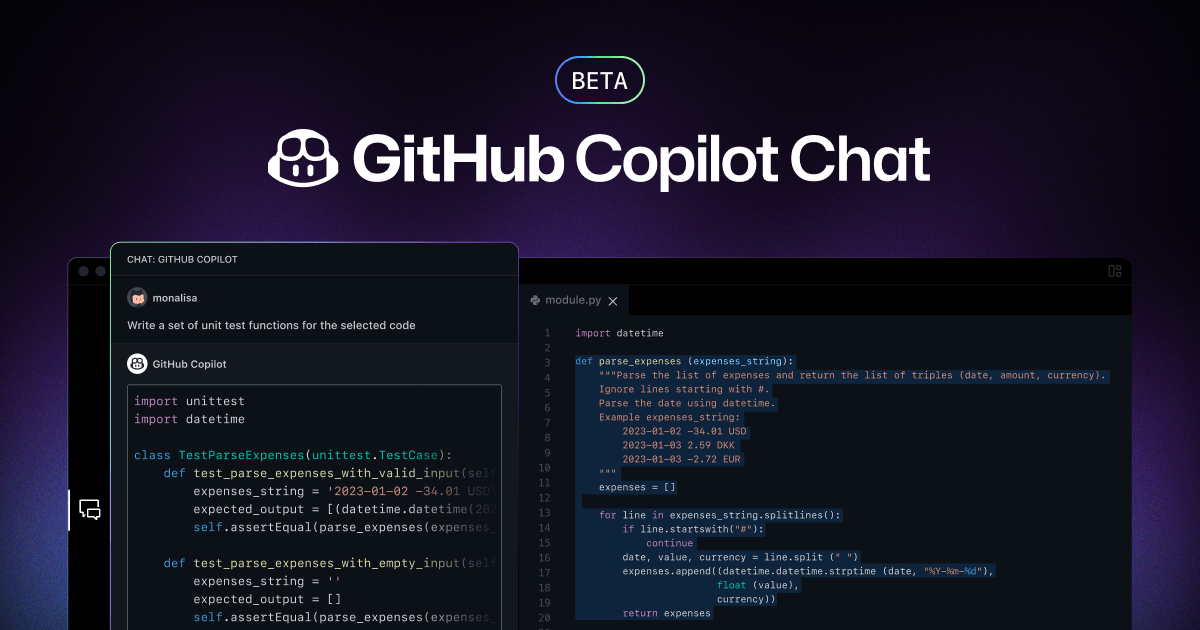
GitHub Copilot’s pricing change is being argued about like a subscription plan got worse. That misses the more useful diagnosis: agentic coding has stopped behaving like an IDE feature and started behaving like metered infrastructure. Once a single developer action can trigger a long context load, multiple model calls, cloud execution, code review, retries, and a pull request, the right comparison is no longer “JetBrains seat” or “Slack seat.” It is CI, cloud build minutes, and API spend.
GitHub’s own announcement is blunt about the transition. Starting June 1, 2026, Copilot plans move from premium request units to GitHub AI Credits, and usage is calculated from token consumption: input tokens, output tokens, and cached tokens. GitHub’s docs define the conversion as 1 AI credit = $0.01 USD. The company’s rationale is equally plain: Copilot “has evolved from an in-editor assistant into an agentic platform capable of running long, multi-step coding sessions,” and a quick chat question should not cost the same as a multi-hour autonomous run.
That part is reasonable. It is also exactly why engineering leaders should stop treating coding agents as a perk managed by procurement and start treating them as a platform capability managed by policy.
The bill is a trace of the workflow
The plan details matter because they show where the product boundary moved. Copilot Pro remains $10/month with 1,500 monthly AI credits; Pro+ is $39 with 7,000; Max is $100 with 20,000. Business includes 1,900 credits per user per month and Enterprise includes 3,900, pooled at the billing entity level. Existing Business and Enterprise customers get promotional pools through September 1, 2026: 3,000 and 7,000 credits per user respectively.
Code completions and next-edit suggestions remain unlimited for paid plans and do not consume credits. The billable zone is where Copilot becomes less autocomplete and more runtime: Chat, CLI, cloud agent, Spaces, Spark, and third-party coding agents. Copilot code review is its own warning label: it can consume both AI credits and GitHub Actions minutes. In other words, one “please review this PR” button can now touch two billing meters and two ownership domains.
The model table makes the operational stakes visible. GitHub lists GPT-5.5 at $5 per million input tokens, $0.50 cached input, and $30 per million output tokens. Claude Opus 4.8 is $5 input, $0.50 cached input, $6.25 cache write, and $25 output. Gemini 3.1 Pro preview is $2 input, $0.20 cached input, and $12 output. Those prices are not scary in isolation. They get interesting when a coding agent repeatedly loads a large repo, generates long diffs, asks itself to revise them, runs review, and tries again.
TechCrunch captured the predictable backlash, including Reddit screenshots claiming potential monthly jumps from roughly $29 to nearly $750, and from around $50 to about $3,000. Some developers called the change a joke; others argued the worst cases look like runaway “vibe coding” rather than normal assisted development. Both reactions can be true. The pricing can be unpleasant, and the bills can still be telling teams something real about uncontrolled agent loops.
Budgets without routing are just prettier outages
GitHub says admins can set budgets and decide whether additional usage continues at published rates or is blocked. That is necessary, but not sufficient. GitHub’s FAQ also says there is no automatic fallback to a lower-cost model when a budget is exhausted. That detail should be written on every platform team’s whiteboard.
A hard budget without routing policy creates a bad developer experience: one minute the agent works, the next minute it stops. A usable policy needs at least three layers. First, defaults: cheap, fast models for exploration, small edits, and explanation. Second, escalation: approved higher-cost models for hard debugging, architecture work, security review, and complex cross-file changes. Third, brakes: retry caps, max task duration, max output size, per-repo ceilings, and manual approval for cloud-agent sessions expected to run long.
This is the same lesson cloud teams learned years ago. You do not hand every engineer an unconstrained production AWS account and call it empowerment. You give them paved roads, quota, alerts, and exceptions. Coding agents need the same treatment, because they are now capable of spending money by reasoning badly for a long time.
The practical engineering response is straightforward. Create per-user and per-team budgets, but also measure spend per repository, per model, per feature, and per task class. Require expensive-model justification for repo-wide refactors. Alert at 50%, 75%, and 90% of monthly allocation. Log prompts, model choices, token usage, tool calls, files touched, and whether a human accepted the output. If your tool stack cannot answer “who spent 40% of the team’s AI credits, on what, and did it merge?”, the governance gap is yours, not GitHub’s.
Teams should also define a kill switch that is more granular than “turn off Copilot.” Disable cloud agents for a repo. Disable code review automation while leaving completions on. Block third-party coding agents until procurement and security review their meters. Cap output-heavy models while leaving lightweight chat available. The goal is not austerity; it is avoiding the dumb version of FinOps where the only control is surprise.
The coding-agent comparison just changed
This pricing move should also change how teams evaluate Cursor, Claude Code, Codex, Aider, Qwen, Copilot, OpenClaw, and every agent wrapper trying to become the default engineering interface. The checklist is no longer “which model feels smartest in the demo?” It is: does the tool expose token usage before the bill lands? Does it support BYOK or negotiated provider pricing? Can it attribute cost to sessions and PRs? Does it cache prompts effectively? Does it show when an agent is looping? Can admins set model policies by repo or user group? Can a reviewer see which expensive calls produced the diff?
The best tools will make cost visible without making engineers feel like they are filing expense reports every time they ask for help. The worst tools will hide the meter, celebrate autonomous workflows, and then act surprised when finance notices that “AI productivity” looks suspiciously like an unreadable cloud bill.
There is a cultural point here too. Teams that use agents well will become more intentional about task boundaries. “Explain this file” should not use the same model, context, or permissions as “rewrite this service and open a PR.” “Fix the failing test” should not be allowed to wander into a dependency upgrade unless the agent asks. Prompt discipline becomes cost discipline because vague tasks create broad context, broad context creates more tokens, and more tokens create both bigger bills and bigger diffs.
The uncomfortable but useful conclusion: GitHub did not just make Copilot more expensive. It made visible the economic shape of agentic engineering. If your team cannot explain who may spend tokens, on which models, against which repos, with what kill switch, you are not adopting coding agents. You are opening a tab and hoping the model closes it politely.
Sources: GitHub, GitHub Docs, TechCrunch, GitHub Community FAQ