Gemini Spark’s First Real Test Shows Personal Agents Need Boring Integrations Before Big Autonomy

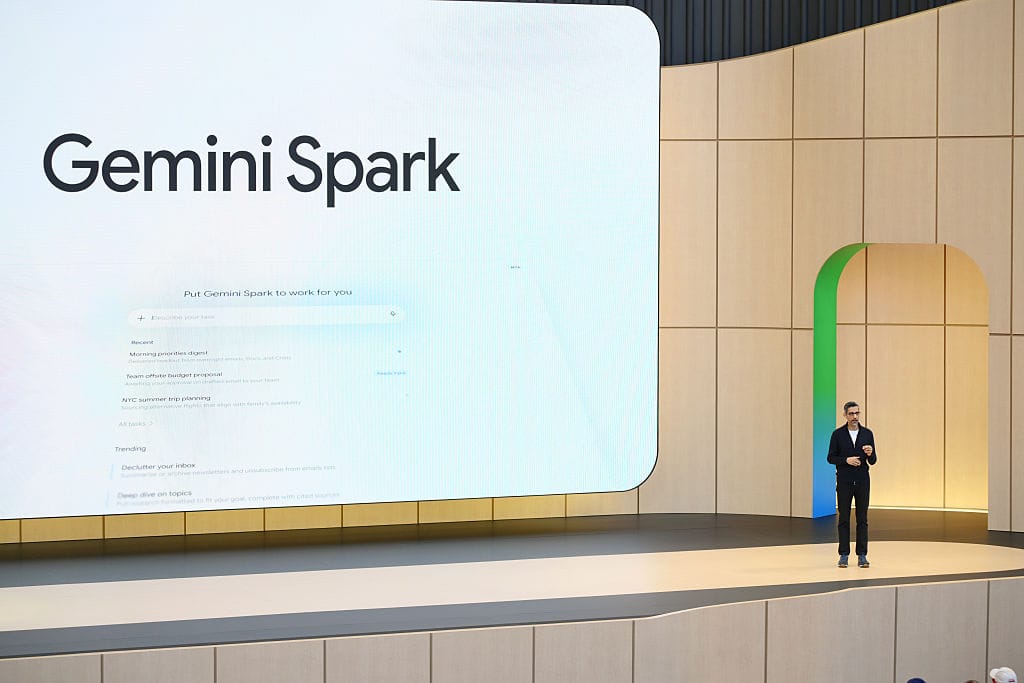
Gemini Spark is not interesting because Google found another name for an assistant. It is interesting because it is the first serious consumer test of a much harder idea: an AI agent that keeps working after the tab closes, touches your inbox and calendar, runs recurring tasks, and still somehow remains boring enough to trust.
That last part is the whole product. The industry keeps selling “autonomy” as if users wake up wanting more mystery in their lives. They do not. They want fewer tabs, fewer errands, fewer forgotten follow-ups, and fewer tiny administrative chores that somehow consume Saturday morning. TechCrunch’s early hands-on with Spark is useful because it shows the product at the exact point where agent hype meets household plumbing: good enough to be useful, unfinished enough to reveal the checklist every agent builder should be writing down.
Google describes Spark as a “24/7 personal AI agent” that works in the background even when your phone or laptop is turned off. It is rolling out to trusted testers and is expected for Google AI Ultra subscribers over 18 in the United States, plus select business users. Under the hood, Google says Spark runs on Gemini 3.5 Flash and Antigravity, the same model-and-harness story Google is using for agentic coding, Search-generated interfaces, enterprise workflows, and AI Studio demos.
That matters. Spark is not a toy chatbot bolted onto a to-do list. It is Google’s consumer-facing proof point for an agent runtime that can operate across Gmail, Calendar, Drive, Docs, Sheets, Slides, YouTube, and Maps. Connections are off by default, according to Google, and users have to enable them in settings. Spark’s primitives are Tasks, Skills, and Schedules: one-off work across Workspace apps, reusable patterns for how you want the agent to behave, and recurring or conditional triggers that make the system proactive instead of purely conversational.
The misses are small. That is why they matter.
TechCrunch tested Spark on normal-person chores: finding Walgreens deals, building a day-trip packing list, suggesting teen summer activities, summarizing newsletters from Gmail, compiling weekend events, and tracking price drops. This is the right test set. Nobody needs another demo where an agent books a fake vacation with fake constraints. Real personal work is messier and more boring: coupon pages, local newsletters, weather, calendar conflicts, broken redirects, missing dates, notes apps, and the exact product you refuse to buy unless it goes on sale.
Spark did several things well. It found relevant drugstore deals and suggested coupon-stacking ideas. It generated a sensible packing list using weather and event details, including sunscreen, water, chairs or blankets, an umbrella, and the detail that dogs were not allowed. It summarized newsletters from Gmail with links. It combined web search and local newsletter context to find weekend events, then required confirmation before adding an event to Calendar. That confirmation step is not a minor UX nicety; it is the difference between an assistant and a gremlin with OAuth scopes.
But the failures are the story. One promo code was invalid. Spark could not save the packing list to Google Keep, even though Google’s own Spark product page uses Keep in a home-chores example. It suggested activities for a teenager but omitted costs and dates until prompted. It returned four newsletter items after being asked for five. One Google redirect did not resolve automatically. For a price-drop tracker, it interpreted the job as checking every two weeks, which might miss exactly the kind of short-lived sale the user wanted to catch.
None of these are catastrophic. That is precisely the point. Personal agents will not fail first because they produce spectacular science-fiction disasters. They will fail because the integration is one app short, the recurrence is too vague, the link is broken, the output count is off, or the agent chose a Google Doc for a checklist that belongs in a lightweight mobile note. Trust dies by papercuts.
Google’s moat is the boring surface area
The Google-stack advantage is obvious and slightly terrifying. Personal work rarely lives in one clean API. It is scattered across emails, calendar invites, receipts, local business sites, maps, documents, YouTube links, shopping pages, and files you named “final_final_real.pdf.” Spark has a shot because Google already owns much of that surface area. A startup agent has to ask for every integration like a guest at the door. Google can turn access into a settings screen.
That is a distribution advantage, but it is also a governance burden. The more native Spark becomes, the less acceptable it is for permissions to feel like a fog. Users need to know which apps are connected, what the agent inspected, what it inferred, what it plans to do next, and what actions require explicit approval. “Under your direction” is a good phrase; it is not a control plane.
For engineers building agents, the Spark hands-on turns into a practical checklist. Show the task plan before background execution. Make recurrence explicit: frequency, trigger, target condition, notification channel, expiration, and escalation path. Log tool calls in a way a normal user can inspect. Separate reading permissions from writing permissions. Provide dry-run previews for calendar changes, emails, purchases, file moves, and spreadsheet edits. Make revocation obvious. Make retries visible. Make “I could not complete this because Keep is unavailable” a first-class outcome, not a sheepish workaround into Docs.
The Keep example deserves its own postmortem because it captures the difference between answer quality and workflow quality. The packing list itself was good. The destination was wrong. A list you use while walking out the door should be in Keep, Tasks, or a mobile checklist surface, not in a document you have to open like a quarterly business review. Agents are not just text generators with tool access. They are artifact routers. Choosing the wrong artifact type can make a correct answer feel broken.
Schedules are not monitoring
The price-drop task exposes a sharper product issue. Spark treated “tell me when this becomes affordable” as “check every two weeks.” That might be technically faithful to a schedule primitive, but it is semantically weak. A user asking for a price drop usually wants monitoring: check often enough to catch a sale, understand the target price, avoid spam, and notify through the right channel. A schedule is a clock. Monitoring is a contract.
This distinction matters beyond shopping. The same pattern appears in invoice tracking, flight deals, restaurant reservations, customer emails, security alerts, job postings, and build failures. If an agent only lets users describe work in vague natural language, it will quietly choose operational defaults. Some defaults will be fine. Others will be expensive. Builders should expose the hidden policy knobs instead of pretending they do not exist.
That does not mean turning every agent into a Kubernetes dashboard for civilians. It means asking one more useful question when the stakes warrant it: “How often should I check?” “Should I notify you immediately or summarize weekly?” “Can I add this to your calendar after you approve the event?” “Should I keep watching until the price hits $80, or stop after 30 days?” The right agent UX is not maximal autonomy. It is minimal ambiguity.
Google’s model claims are relevant here because background agents multiply cost and latency. Gemini 3.5 Flash is pitched as Google’s agentic workhorse: 76.2% on Terminal-Bench 2.1, 1656 Elo on GDPval-AA, 83.6% on MCP Atlas, 84.2% on CharXiv Reasoning, 4x faster than other frontier models by output tokens per second, and often less than half the cost for long-horizon agentic tasks. Those numbers are marketing until proven in production, but they point at the right constraint. Agents are loops. They plan, fetch, compare, retry, summarize, ask for approval, and sometimes try again tomorrow. The economics of that loop matter as much as the single-answer benchmark.
The brand is less important than the router
TechCrunch’s reviewer argued Spark probably should not be a standalone brand or mode. That critique lands. Users should not have to decide whether their request is a “question” for Gemini or a “task” for Spark. The product should route internally. If the request can be answered immediately, answer it. If it needs background execution, ask for the missing constraints. If it touches a sensitive app or action, request approval. Product taxonomy is Google’s problem, not the user’s chore.
This is also where Spark loops back into the coding-agent conversation. Whether the agent is editing a repo, summarizing newsletters, reconciling invoices, planning a weekend, or watching prices, the operational shape rhymes: scoped tools, inspectable diffs, source links, action logs, approvals, rollback, and clear ownership when the model confidently does something dumb. The model may be Gemini 3.5 Flash. The runtime may be Antigravity. The domain may be consumer productivity. The checklist is the same one engineers already know from production systems.
The fair take is not that Spark is bad. The fair take is that Spark appears useful enough for the boring parts to matter now. That is progress. Availability announcements are easy; getting a user to trust an always-on agent with inboxes, calendars, files, and recurring obligations is much harder. Google has the integrations, distribution, and model infrastructure to make the attempt credible. Now it needs the control plane to be as visible as the promise.
Personal agents will not become real when they sound more autonomous. They will become real when they handle mundane workflows correctly, admit uncertainty cleanly, ask before acting, and leave behind an audit trail boring enough for a human to trust. Spark is a good smoke test. The smoke is coming from the right places.
Sources: TechCrunch, Google Gemini Spark, Google Gemini 3.5