Google’s I/O Recap Is Really an Agent Distribution Map

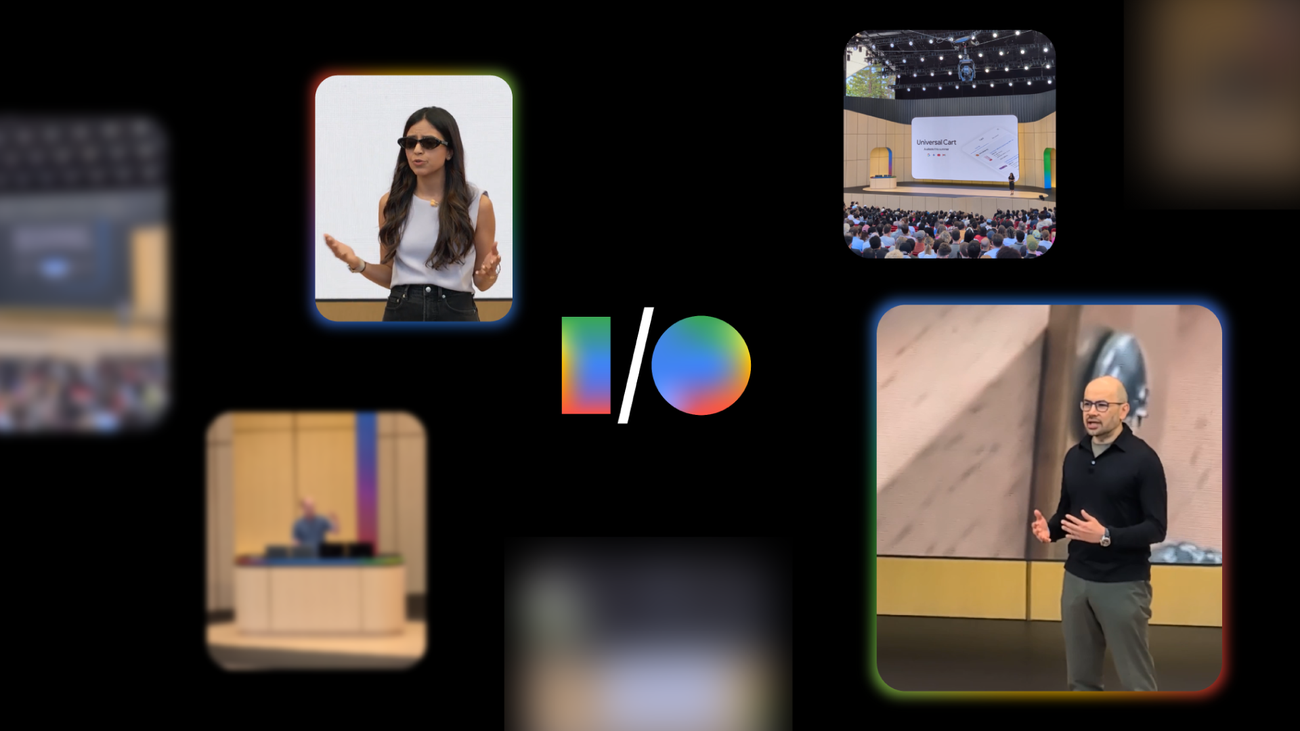
Google’s latest I/O recap looks like a highlight reel. Treat it that way and you miss the product strategy hiding in plain sight: Google is not trying to make one agent app win. It is turning every surface it owns into an agent distribution channel.
The May 28 post packages twelve keynote moments — Gemini Omni, Gemini 3.5 Flash, Search information agents, Antigravity-powered Search experiences, Daily Brief, Universal Cart, Gemini Spark, macOS automation, intelligent eyewear, SynthID, and Gemini for Science — into one convenient catch-up page. Fine. But the useful read for engineers is not “Google announced a lot of AI.” We knew that. The useful read is that Google now has a reasonably coherent stack: a model layer, a coding/orchestration harness, consumer distribution through Search and Gemini, enterprise distribution through Gemini Enterprise Agent Platform, and action surfaces across Workspace, Shopping, YouTube, Gmail, Android XR, Chrome, and the desktop.
That is less glamorous than a demo video. It is also the part that matters.
The agent runtime is being smuggled in as product UX
Start with Gemini 3.5 Flash. Google describes it as the first model in the Gemini 3.5 family, built for “frontier intelligence with action,” and positions it around agents and coding rather than just chat quality. The benchmark claims are deliberately aimed at practitioner anxiety: Terminal-Bench 2.1 at 76.2%, GDPval-AA at 1656 Elo, MCP Atlas at 83.6%, CharXiv Reasoning at 84.2%, plus a claim that it is four times faster than other frontier models by output tokens per second and often less than half the cost for long-horizon agentic tasks.
Benchmarks are not adoption. But the distribution list is the tell. Gemini 3.5 Flash is available through Google Antigravity, the Gemini API in AI Studio, Android Studio, Gemini Enterprise Agent Platform, Gemini Enterprise, AI Mode in Search, and the Gemini app. That is Google putting the same action-oriented model behind consumer answers, developer workflows, enterprise agents, and IDE-adjacent coding. The strategy is not to ask users to visit a new destination. It is to make the old destinations more agentic until the boundary disappears.
Search is the most important example because it reframes what “agentic coding” even means. Google says Search will use Antigravity and Gemini 3.5 Flash to generate dynamic layouts, simulations, visual tools, dashboards, trackers, and “mini apps” from prompts. A user searching for a fitness plan or a home-move checklist may not think they are asking for software. Google does. Search becomes a lightweight app generator with live web context, recurring state, and a familiar entry point.
That should make builders both interested and nervous. Interesting: the fastest path from intent to interface may be a search box that writes custom UI. Nervous: generated mini apps raise all the usual software questions — correctness, provenance, state management, accessibility, persistence, and cleanup — inside a product category that users historically treat as informational. If Search builds a tracker from live sources, who owns the bug? If an information agent monitors blogs, news, social posts, finance data, shopping data, and sports feeds 24/7, how does a user inspect why it notified them, what it ignored, and whether it is still worth running?
Spark is where the governance bar gets real
Gemini Spark is the more explicit version of the same thesis. Google describes it as a 24/7 personal AI agent in the Gemini app that runs in the cloud, integrates with Workspace tools like Gmail, Docs, and Slides, and can keep working after the laptop is closed. It can set recurring tasks, learn skills, create workflows, and soon use MCP connections to Canva, OpenTable, and Instacart. Google says users choose whether to turn it on, choose what apps it connects to, and Spark asks first before high-stakes actions like spending money or sending emails.
That last sentence is the whole ballgame. “Ask before high-stakes actions” is necessary. It is not sufficient. A serious personal agent needs scoped permissions, action previews, dry runs, audit logs, revocation, durable memory controls, source attribution, failure recovery, and a clear distinction between “I read this in your Gmail,” “I inferred this from your calendar,” and “I called an external tool through an MCP connector.” Otherwise the demo is productivity and the product is ambient blast radius.
The same standard applies to Daily Brief. Google says the feature works across connected Gmail and Calendar data after opt-in, gathers urgent updates, tracks upcoming events, prioritizes by user goals, and lets users steer it with thumbs-up or thumbs-down feedback. That sounds useful because everyone’s inbox/calendar graph is already where work friction lives. It also means the first successful agent products may look boring: morning briefs, follow-up lists, project drafts, shopping carts, and booking flows. Glamour is optional. Permissions are not.
Universal Cart pushes the same pattern into commerce. Google says the cart spans Search and Gemini in the U.S. this summer, with YouTube and Gmail to follow. It can add products while users browse, chat, watch, or read; then monitor price drops, stock changes, and price history. That is agentic commerce without the sci-fi costume: persistent intent, cross-surface state, payments context, merchant routing, and background monitoring. For product teams, the lesson is blunt. If your agent cannot live where the transaction already happens, it may just be a chatbot with errands.
The practitioner checklist is integration, not hype
Developers should read this recap as a map of runtime boundaries. Antigravity is Google’s visible harness for coding and orchestration. Gemini 3.5 Flash is the fast model Google wants trusted for long-horizon work. AI Studio, Android Studio, and Gemini APIs are the developer surfaces. Search is the mass-market distribution layer. Gemini and Workspace are the personal context layers. Gemini Enterprise Agent Platform is the business control plane. MCP-style connectors are the extension mechanism. Chrome, Search, and SynthID verification become part of the trust and provenance layer.
That map suggests a few concrete moves. If you are building on Google’s AI stack, design for reviewable actions, not just successful completions. Capture tool calls, generated artifacts, approvals, rejected actions, and downstream effects. Treat generated UI like generated code: useful, but requiring tests, accessibility checks, and state boundaries. If you are exposing an MCP connector, assume it may be invoked by background agents and document scopes, rate limits, side effects, and failure modes like you would for a production API.
If you are competing with Google, the lesson is harsher. Standalone agent UX has to beat deeply embedded agent UX. Google can put agents into Search, Gmail, Calendar, Shopping, YouTube, Android, Chrome, and the desktop. That does not guarantee quality, but it does guarantee distribution and context. The opening for smaller teams is not to out-Google Google on surface area. It is to be more trustworthy, more specialized, more auditable, or more willing to integrate with non-Google workflows where the platform owner has weaker defaults.
SynthID is the quiet trust signal in the recap. Google says it has watermarked more than 100 billion images and videos and 60,000 years of audio assets, and that verification is expanding to Search and Chrome. It also says OpenAI, Kakao, and ElevenLabs are adopting SynthID for some generated content. That does not solve provenance, but it acknowledges that agentic media generation and agentic distribution need verification infrastructure. If Search, Gemini, and YouTube all become creation surfaces, “is this synthetic?” cannot be a third-party browser extension problem.
The cynical read is that this is Google bundling AI into everything because it can. Not wrong. But the more useful read is that agents are becoming infrastructure, not destinations. Models matter. So do harnesses, identity, payments, permissions, source grounding, browser context, app connectors, and the boring logs nobody puts in keynote demos.
That is the review comment: Google’s I/O recap is not twelve separate announcements. It is one architecture diagram drawn in product screenshots. The demos will age. The distribution map will not.
Sources: Google Blog, Gemini 3.5 announcement, Google AI Search announcement, Gemini app update