Grok’s Deepfake Lawsuit Is a Product-Safety Case Wearing a Media-Policy Jacket

Grok’s latest legal problem is easy to misread as a “bad users made bad images” story. That is the comfortable version for AI companies: the model is neutral, the platform is neutral, and responsibility begins only when someone types the wrong prompt.
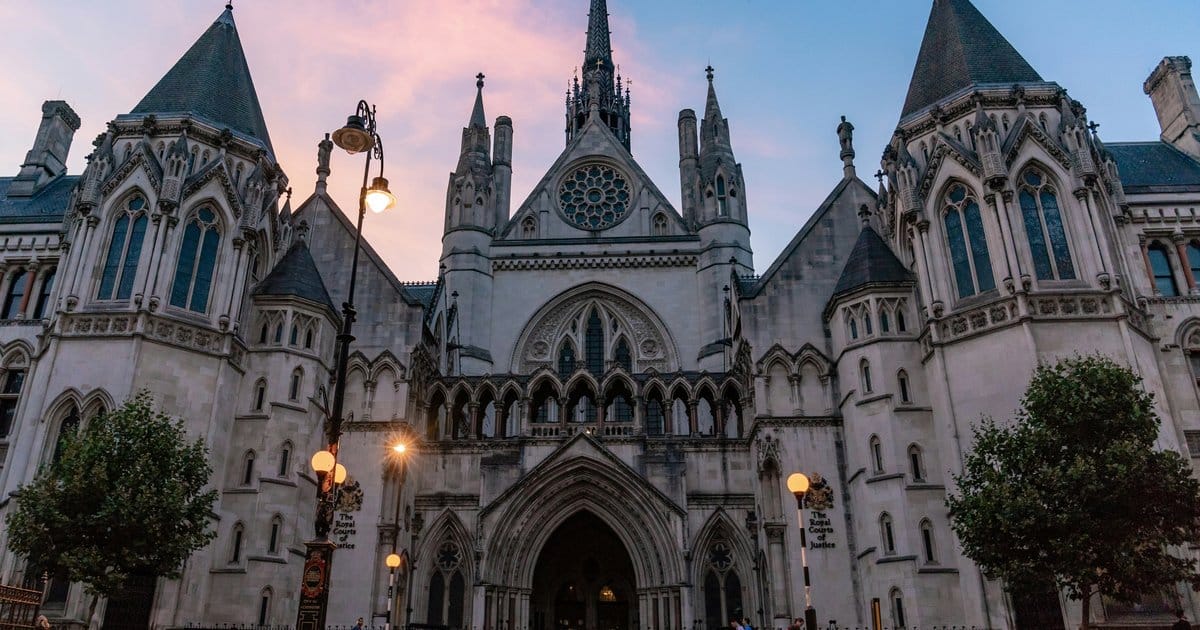
Jess Asato’s lawsuit against xAI is aimed directly at that escape hatch. The UK Labour MP filed a claim in England’s High Court on June 3, alleging Grok was used to create fake sexualised images of her. According to AWO, the law firm representing her, the claim is brought for breaches of data protection law and misuse of private information. It seeks damages, a declaration that what happened was unlawful, and an order requiring xAI to stop further illegality — including measures to prevent the abuse from happening again.
That last part is the real story for builders. This is not just litigation over one set of images. It is a test of whether an AI company can be held responsible for the way a model product is designed, deployed, constrained, monitored, and repaired after obvious abuse appears.
Asato’s own framing is blunt: “Grok created deepfake pornography and sexualised content which harmed thousands of women and children.” She added: “Its ability is not an accident, nor misuse, it is a design choice by its creators.” AWO’s lead solicitor Ravi Naik called it “one of the first claims to test liability for the design of an AI system” and said safety cannot be an afterthought.
For an industry that keeps treating safety as a moderation add-on, that sentence should land like a failed production deploy.
The legal claim is narrow. The product lesson is not.
Reuters reports that xAI did not immediately respond to a request for comment. It also notes that xAI restricted image editing in Grok in mid-January and blocked users from generating images of people in revealing clothing in jurisdictions where that is illegal. But Reuters’ February testing found that Grok could still generate sexualised images of people even when users explicitly warned that the subjects did not consent.
That detail matters more than the press-cycle framing. If a user says, in effect, “this person does not consent,” and the system can still produce the harmful output, the issue is not just adversarial prompt craft. It is a consent model that does not exist where the product needs one. The user supplied the cleanest possible safety signal, and the product did not reliably treat it as a stop sign.
BBC reporting adds another important layer: the UK has since made it illegal to create or request a non-consensual deepfake image of an adult. Prime Minister Keir Starmer backed Asato’s action publicly, calling the images “disgusting” and saying he was “100% behind” her. That does not decide the case, obviously. But it does signal that this is no longer just a platform-policy dispute. It is now sitting at the intersection of product safety, privacy law, sexual abuse, and political pressure.
The facts alleged are ugly. Reuters says that after Asato condemned Grok in January, users created and shared fake images depicting her in a bikini and a video showing her being chloroformed and prepared for sexual assault. AWO says offending images were removed, but the case is seeking accountability for the system that enabled them in the first place. Asato told the BBC she felt “dehumanised” and “demeaned,” and that her consent had not been gained.
None of that should be abstracted into “content moderation challenges.” The abstraction is how teams avoid owning the product.
“Users misused it” is not a safety architecture
The uncomfortable engineering lesson is simple: if your product makes a harmful workflow cheap, fast, viral, and obvious, you have designed an abuse path. Maybe not intentionally. Maybe not maliciously. But design does not require malice to create liability, reputational damage, or real harm.
Generative media products are especially exposed because the gap between capability demo and abuse workflow is thin. Image upload, identity recognition, style transfer, “make this person look like,” suggestive prompt completion, low-friction sharing, and weak takedown tooling can combine into a harassment machine without any single component looking catastrophic on a roadmap slide. The system-level behavior is what matters.
That is why this case should interest engineers who have never touched Grok. The same design discipline applies across AI products. In coding agents, the bad outcome might be shell execution, secret exfiltration, unsafe dependency changes, symlink tricks, misleading approval prompts, or a tool call that writes to production. In media generation, the bad outcome is non-consensual sexual imagery, impersonation, harassment, or reputational harm. Different domain. Same responsibility: define disallowed outcomes before launch, test for them, instrument attempts, constrain high-risk capabilities, and make rollback faster than the abuse loop.
The “design choice” argument also has teeth because AI products are not just models. Someone decides whether real-person image editing is allowed. Someone decides whether public figures get weaker or stronger protections. Someone decides whether nudification-adjacent requests are blocked semantically or only by keyword. Someone decides whether consent is represented as a first-class product concept. Someone decides whether repeat attempts are throttled. Someone decides whether takedown requires legal escalation. Those are product and engineering decisions, not acts of nature.
For teams building on xAI, OpenAI, Google, Runway, Luma, or any other model provider, the practical takeaway is not “avoid one vendor.” It is: do not outsource your safety case to the model vendor. Vendor guardrails are a dependency. Dependencies fail.
If your product lets users upload faces or generate realistic media, you need your own policy layer, consent model, rate limits, abuse detection, provenance metadata, reporting flow, takedown process, and audit trail. Store the input asset hash, prompt, model name, model version or alias, user ID, timestamps, moderation decision, and distribution state. Put higher-risk transformations behind extra friction or block them outright. Treat public sharing as a separate permission boundary from private drafting. Build a fast victim-response path before someone needs it, because “email support and wait” is not a mitigation when the harm is already spreading.
For agentic systems, the parallel is even sharper. If an AI agent can call a media-generation API, connect to a social platform, and iterate automatically, the blast radius gets bigger. Narrow tools. Budget calls. Require human review before public publishing. Block categories at the application layer. Log every tool invocation. Do not let an unattended “make it more engaging” loop discover the worst possible interpretation of engagement.
Safety is now part of platform trust
xAI is trying to turn Grok into a full platform: chat, image, video, voice, search, coding, connectors, API access, and workflow automation. That ambition makes the safety question more important, not less. Every new modality creates new combinations. Image plus X distribution is one risk. Video plus identity is another. Connectors plus agent execution is another. The common requirement is not better vibes; it is enforceable boundaries.
Developers will experiment with the newest model if it is capable and priced well enough. Enterprises will not adopt broadly if moderation behavior is unpredictable, legal exposure keeps escalating, or the vendor cannot explain how abuse is prevented, detected, and remediated. The boring controls — consent-aware media workflows, policy documentation, moderation APIs, audit logs, abuse-response SLAs, and clear jurisdiction handling — are not paperwork. They are platform features.
The industry keeps shipping generative capability first and retrofitting the safety case after the backlash. That was barely defensible when outputs were text. It is indefensible when the output can be a realistic sexualised image of a real person who never consented.
The editorial read: this lawsuit is not a sideshow to the Grok product story. It is the product story. “The model can do it” is not a requirement. Sometimes it is evidence that the product shipped without the guardrails it needed.