Nemotron 3 Is NVIDIA’s Open-Agent Stack Pitch, Not Just Another Leaderboard Slide

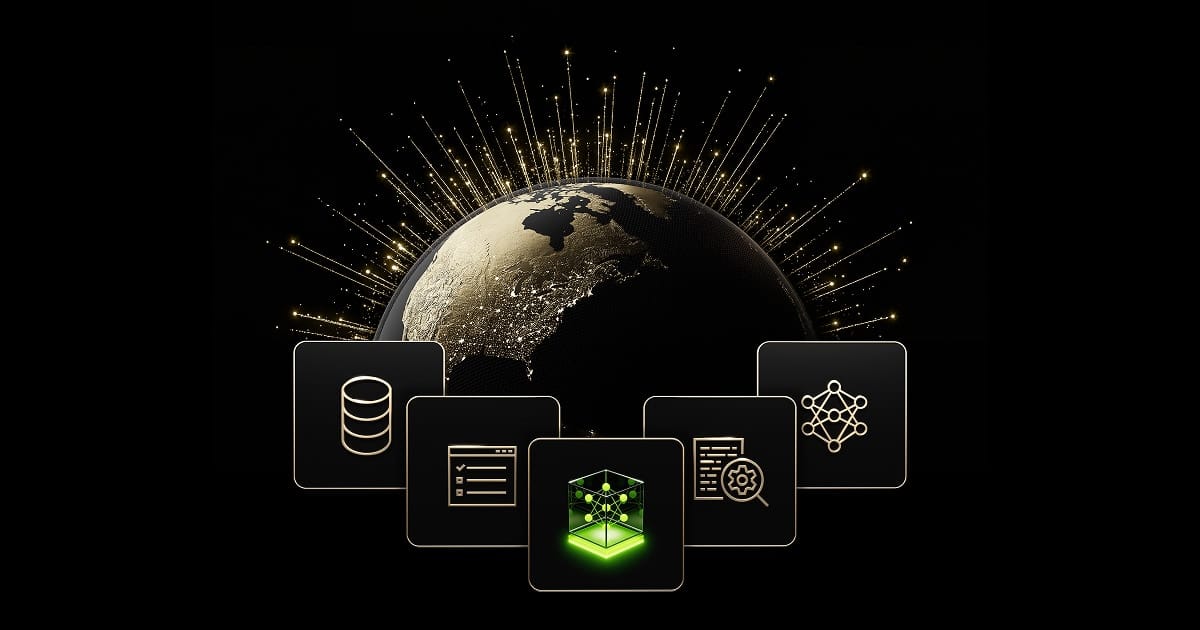
NVIDIA’s Nemotron 3 launch is not really a model announcement. It is NVIDIA making a very explicit bet that the next useful AI stack is a routing stack: small specialists for cheap work, stronger models for tool-heavy orchestration, and an expensive escalation tier for the problems that still deserve a large model. That sounds less glamorous than a leaderboard win. It is also much closer to how serious agent systems will be built.
The official Nemotron page frames the family as “high-efficiency, multimodal, open models for long-running AI agents,” which is a refreshingly operational sentence. The developer hub goes further: Nemotron models ship with open weights, training data, and recipes, with model weights and training data available on Hugging Face and technical reports intended to show how the models were made. That openness matters because agent infrastructure is not a normal chatbot integration. If a model is going to read long context, call tools, route subtasks, touch documents, and maybe run inside enterprise workflows, procurement and security teams need more than a model-card adjective and a demo video.
The useful shape is Nano, Super, Ultra — not one magic model
The lineup is deliberately tiered. Nemotron 3 Nano 30B A3B is positioned for efficient specialized sub-agents, with NVIDIA claiming 4x faster throughput than Nemotron 2 Nano and leading accuracy for coding, reasoning, math, and long-context tasks. Nano Omni 30B A3B extends that role into multimodal work — video, audio, image, and text — aimed at computer-use agents, document intelligence, and video/audio understanding. Nemotron 3 Super 120B A12B is the higher-throughput reasoning and tool-calling tier for multi-agent applications. Llama Nemotron Ultra 253B is the mission-critical escalation model for complex enterprise workflows.
That ladder is the story. Most agent deployments do not fail because teams cannot find one impressive model. They fail because every step gets routed to the same expensive generalist until the token bill becomes a governance incident, or everything gets routed to the cheap model until the system confidently breaks the hard task. A production coding or document agent needs multiple capability/cost points: parse the repo cheaply, classify files cheaply, summarize logs cheaply, ask a stronger model to plan the risky migration, then use a small verifier to check invariants. Nemotron 3 is NVIDIA trying to package that pattern as a default architecture.
The architecture supports the pitch. NVIDIA says Nemotron 3 uses a hybrid Mamba-Transformer mixture-of-experts design with 1M-token context for the new family. The active-parameter framing is especially important: Nano is roughly 30B total with about 3B active in the Omni variant and 3.6B active in the Nano training guide; Super is described in the research brief as roughly 120.6B total with 12.7B active. Total parameters make for launch-slide drama. Active parameters are what engineers start caring about when they price inference.
Open weights are table stakes; open recipes are the interesting part
The developer hub says the Nemotron data collection spans more than 10T tokens and more than 40M post-training samples across pretraining, post-training, personas, safety, reinforcement learning, RAG, and multimodal data. Nemotron Omni adds about 127B cross-modal pretraining tokens and roughly 124M curated post-training examples for document reasoning, computer use, and long-horizon workflows. Those numbers are large, but the more important claim is inspectability. If the training data, recipes, and reports are actually usable, teams can evaluate provenance and adapt the stack instead of treating the model as a sealed appliance.
This is where NVIDIA’s position is different from a pure model lab. The company is not just publishing checkpoints. It is tying them to NeMo, TensorRT-LLM, NIM microservices, Hugging Face, vLLM, SGLang, Ollama, llama.cpp, LM Studio, Unsloth, RTX PRO, DGX Spark, and data-center GPUs. That is convenient. It is also the lock-in surface. The smart buyer reads both halves of that sentence. NVIDIA is giving teams many deployment paths, but the path of least resistance will obviously favor NVIDIA hardware and NVIDIA serving software.
That is not automatically bad. If you are running regulated enterprise agents, “boring and supported” beats “heroic and fragile.” But if your reason for choosing open models is portability, test the boring pieces before committing: quantized model quality, vLLM and SGLang support, GGUF behavior in llama.cpp, Ollama packaging, LM Studio latency, context-window degradation, tool-call formatting, rollback paths, and whether observability survives outside the vendor’s preferred runtime. Open weights do not guarantee operational freedom. They give you the right to find out how much work freedom costs.
The benchmark to care about is task success per dollar
Nemotron 3 will inevitably get judged by leaderboard screenshots. That is fine as far as it goes, which is not very far. The more useful evaluation for practitioners is task success per dollar under your own harness. For coding agents, that means measuring repo-level tasks with realistic permissions, timeouts, and tool policies. For document agents, it means measuring extraction quality, hallucination rates, grounding behavior, and latency on messy internal PDFs rather than clean benchmark samples. For multimodal agents, it means testing screenshots, audio, video, and layout-heavy data in the workflows where mistakes actually cost money.
The research brief notes that Hugging Face downloads were already substantial across Nemotron 3 variants — hundreds of thousands to low millions — and that the NVIDIA-NeMo/Nemotron repo had more than 1,100 stars with a fresh same-day push. Usage signal is not proof of quality, but it does show that this is not a paper launch drifting into the archive. Developers are pulling the models because the proposition is concrete: local or self-managed agent models with enough performance to be worth routing against frontier hosted systems.
The most practical path is not “replace Claude, GPT, or Gemini with Nemotron.” That is the wrong migration shape. The better pattern is a router. Use Nano for cheap sub-agent work: file triage, extraction, local privacy-sensitive analysis, multimodal preprocessing, and simple code or documentation chores. Test Super for long-context reasoning, tool calling, and SWE-style tasks where a stronger open model could reduce dependence on hosted frontier APIs. Reserve Ultra-class serving for the ambiguous planning work if your internal evals show it earns the latency and cost. Then keep a hosted frontier fallback for cases where the open stack is not yet good enough. Model monoculture is how agent budgets become folklore.
There is also a security point hiding in the agentic marketing. A model family designed for long-running agents, tool calling, computer-use-adjacent workflows, and multimodal input needs governance at the harness layer. NVIDIA’s Nemotron Safety and NeMo Guardrails materials help, but the model cannot decide your permission boundaries for you. Teams need command allowlists, MCP/tool permission reviews, prompt-package provenance, secret redaction, spend caps, artifact checkpoints, and audit logs for every long-running session. Tool competence increases blast radius. It does not replace approval design.
The LGTM take: Nemotron 3 is interesting because it treats open-agent deployment as a systems problem, not a trophy model problem. If NVIDIA can make Nano/Super/Ultra into a reliable cost/capability ladder across local, hosted, and enterprise environments, that is more valuable than another launch-week “beats X on Y” claim. The work for engineers is straightforward: benchmark it inside your own router, measure task success per dollar, and do not let a 1M-token context window distract you from the still-unsolved work of traces, budgets, permissions, and rollback.
Sources: NVIDIA Nemotron official page, NVIDIA Developer Nemotron hub, NVIDIA-NeMo/Nemotron GitHub, NVIDIA Nemotron v3 Hugging Face collection, Artificial Analysis