NVIDIA and Microsoft Want Local Agents to Stop Being a Privacy Demo and Become a PC Platform

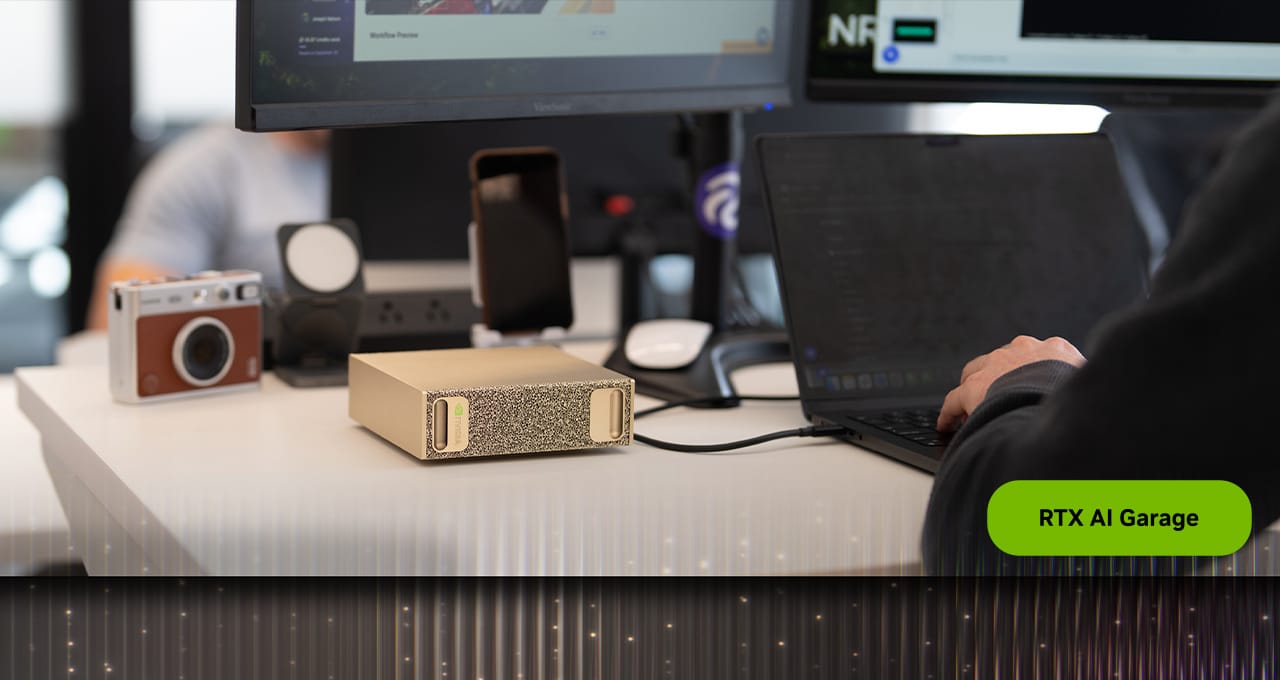
Local AI agents have spent the last two years living in an awkward split-screen reality. The privacy argument is excellent: keep source code, documents, customer data, and personal context on the machine instead of pushing everything through a cloud model. The product reality has been much less flattering: underpowered laptops, inconsistent local model quality, fuzzy permissions, and a security model that often amounts to giving an eager intern full control of your desktop and hoping the prompt was clear.
NVIDIA and Microsoft are now trying to turn that demo into a platform. At GTC Taipei and COMPUTEX, NVIDIA announced RTX Spark, a new Windows PC class aimed at running personal agents locally, alongside OpenShell support on Windows through Microsoft security primitives. The pitch is bigger than “more TOPS in a laptop.” NVIDIA is pairing up to 1 petaflop of AI compute and 128GB unified memory with identity, containment, policy, local/cloud routing, and personal-data masking for agent workloads.
That last part is the real news. Local inference by itself does not make an agent safe. It only changes where the model runs. A useful desktop agent still needs to read files, call tools, manipulate application state, execute code, browse private data, and sometimes decide whether a cloud model should be involved. If the runtime cannot prove what the agent touched, what stayed local, and what crossed the network boundary, “runs on device” is privacy theater with a better GPU.
The hardware is loud. The policy layer is the product.
NVIDIA says RTX Spark systems will arrive this fall from ASUS, Dell, HP, Lenovo, Microsoft Surface, and MSI, with Acer and GIGABYTE to follow. The company claims the platform can run 120B-parameter large language models with up to 1 million tokens of context locally, edit 12K 4:2:2 video, generate 4K AI video, render 90GB+ 3D scenes, and play AAA games at 1440p over 100 FPS. NVIDIA also points to llama.cpp optimizations, including multi-token prediction, claiming 2x performance on Qwen 3.6/3.5 27B and 1.6x on Qwen 3.6/3.5 35B on GeForce RTX 5090, plus tensor parallelism improvements across two equivalent GPUs.
Those are useful platform signals, especially for developers building local or BYOK coding agents. Long context on-device changes what is possible for private repository inspection, local retrieval, document-heavy workflows, and offline-ish research. But the performance numbers are not the part engineering leaders should forward to security. The OpenShell policy model is.
NVIDIA describes OpenShell as a secure agent runtime that can define what agents can and cannot do, route queries to local models based on privacy policies, and disguise personal information before cloud calls. Microsoft’s role matters because Windows is where many personal and enterprise desktop workflows actually happen. If the agent runtime can plug into Windows identity, containment, and policy primitives, local agents get a path out of hobbyist CLI land and into something administrators might actually govern.
OpenClaw and Hermes Agent are named as early adopters of the OpenShell plus Windows security primitive stack. NVIDIA quoted OpenClaw Foundation chief architect Vincent Koc saying the stack enables “private, personal agents running on device.” That is the right ambition. The hard part is whether the permission model is granular and auditable enough for real work, not whether the launch quote sounds correct.
Local is not a binary. It is a routing policy.
The naive local-agent story says: cloud bad, local good. Practitioners know the truth is messier. A serious coding agent may use a small local model to classify private repo context, a stronger cloud model for difficult reasoning, a sandbox for code execution, local embeddings for retrieval, and a policy engine to decide what data is allowed to leave the machine. That is not “local AI” as a sticker. That is model routing under constraints.
This is where RTX Spark becomes relevant to AI-framework teams. The framework boundary is no longer just “which model do I call?” It is “where can this action run, what data is visible, what credentials are available, who approved the capability, and how do we log the decision?” A local coding agent is not Qwen in llama.cpp. It is filesystem permissioning, shell execution controls, window automation, prompt redaction, local/cloud fallback policy, telemetry, and session state.
For developers, the practical evaluation should be boring and concrete. Can the agent inspect a private monorepo without sending source code to a cloud endpoint? Can it explain when it did use the cloud and which snippets were included? Can admins restrict the agent to specific directories, applications, network destinations, and credentials? Can the user review an action before it modifies files or invokes a paid remote model? Are policy decisions logged in a form that survives an incident review?
If the answer is mostly yes, local agents become a real product category. If the answer is “the model runs locally, trust us,” then this is just another desktop assistant wearing a privacy hoodie.
What teams should do before buying the shiny PC
Engineering teams should not treat RTX Spark as automatic buying advice. Treat it as a forcing function to write down your local-agent requirements. Pick representative workloads: repo search, failing-test diagnosis, small refactor, customer-log analysis, document summarization, desktop automation. Measure latency, thermal behavior, context loading, tool-call reliability, and how often the workflow still needs a cloud model to be useful.
Then test governance. A local agent that can read private files and run shell commands is powerful precisely because it is dangerous. The minimum production checklist should include per-directory access rules, explicit write permissions, command allow/deny lists, model-routing logs, redaction rules, session transcripts, and a kill switch. For enterprise environments, add centralized policy management and revocation. The agent should not become a new shadow admin account just because the UI says “personal.”
The most interesting version of this future is not every developer running a giant model locally all day. It is hybrid: local models handling private, repetitive, latency-sensitive work; cloud models handling expensive reasoning when policy allows; and the runtime making those transitions visible. That is a healthier architecture than pretending either endpoint can solve the whole problem.
NVIDIA is good at making hardware feel inevitable. This time, the inevitability depends on software discipline. RTX Spark only matters for agents if OpenShell and Windows policy controls make local execution governable, inspectable, and boring enough for daily use. Privacy is not where the tensor runs. Privacy is the receipt for what the agent did.
Sources: NVIDIA Blog, NVIDIA Newsroom, NVIDIA GeForce, Times of India