NVIDIA’s DGX Spark Update Makes Local Agents Look Less Like a Hobby and More Like Infrastructure

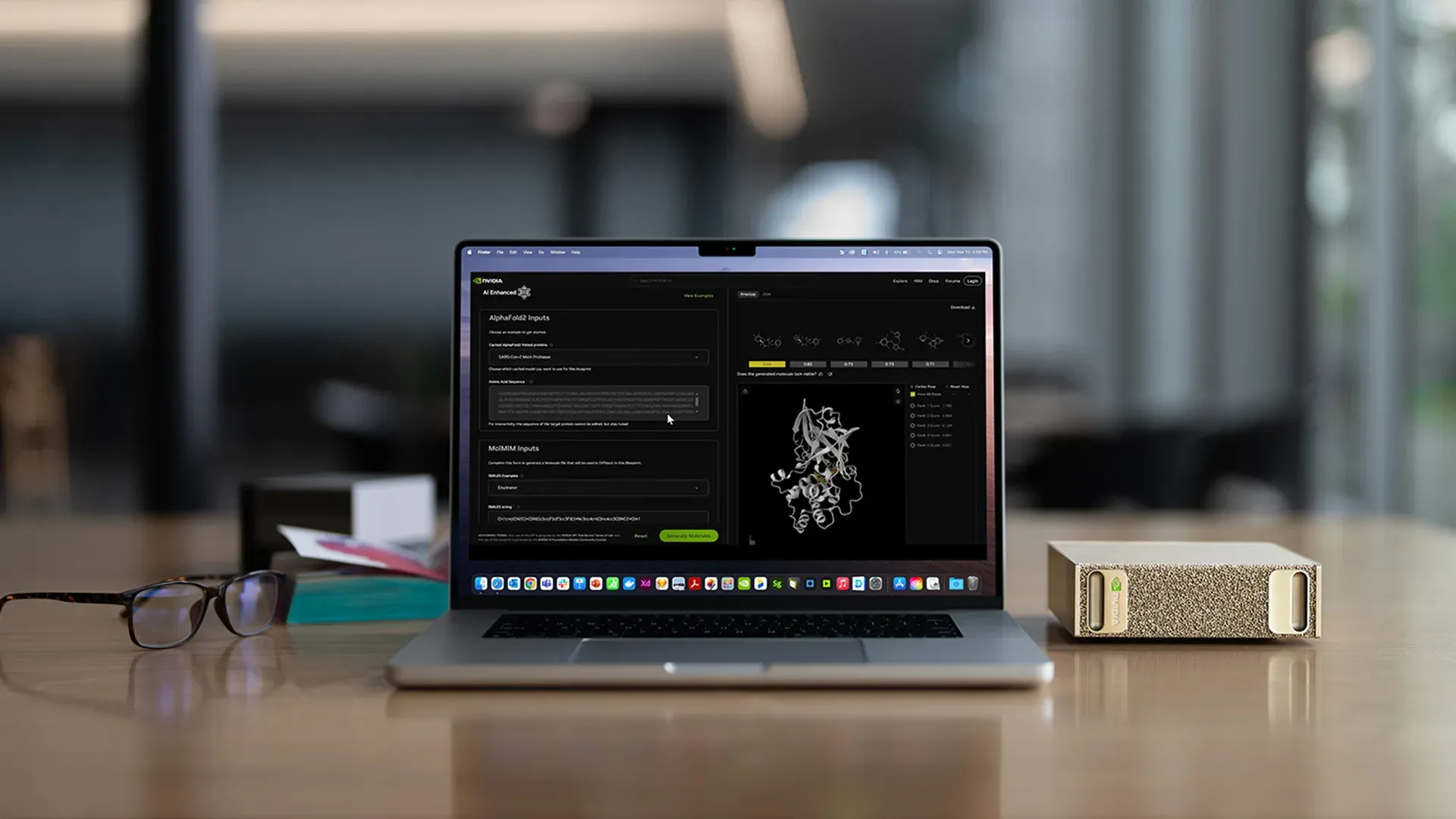
Local AI agents have spent the last two years trapped between two unsatisfying defaults: tiny models that fit on developer hardware but collapse under real repo context, and frontier APIs that work well until the bill, data policy, or network dependency becomes the product constraint. NVIDIA’s latest DGX Spark update is interesting because it does not pretend a single model checkpoint fixes that. It packages the stack around the model: NemoClaw for agent setup, OpenShell for sandboxed execution, Qwen3.6-35B in a tuned local path, vLLM serving knobs, and a cluster assistant for teams that outgrow one box.
That is a more serious story than “NVIDIA made local inference faster.” Faster is nice. Infrastructure is what makes the difference between a weekend demo and something an engineering team can route work through without holding its breath.
The local-agent pitch is becoming operational, not romantic
NVIDIA frames the update around a familiar but real pain: long-running agents keep large context windows, spawn concurrent subagents, iterate continuously, and often need access to private code, documents, credentials, or internal systems. Cloud agents are convenient until those constraints matter. Local execution gives teams more control over data locality and removes per-token cloud charges, but it also hands them the unglamorous burden of model serving, sandboxing, logs, runtime permissions, and machine setup.
The DGX Spark update tries to compress that burden into a supported path. The June 2026 DGX Spark software release updates the out-of-box experience so new systems reach the Ubuntu desktop faster by skipping default over-the-air installation during initial setup. From there, NVIDIA’s NemoClaw install path wires together open models, an agent harness such as Hermes Agent or OpenClaw, and NVIDIA OpenShell, a sandboxed execution environment with access controls, privacy protections, and operational guardrails.
That last piece matters more than the installation convenience. A local agent is not automatically safe because it is local. It can still delete files, install packages, read secrets, follow malicious repository instructions, or leak information through integrations. OpenShell’s promise is not magic security; it is a better default boundary for a class of software that otherwise tends to begin life as “curl something into bash and let the model touch my project.” That sentence should make every senior engineer reach for coffee.
Qwen3.6-35B is the model story, but the serving recipe is the tell
The headline performance claim is straightforward: NVIDIA says developers can see up to 2.6× faster inference for Qwen3.6-35B on DGX Spark when using NVIDIA’s NVFP4 quantized checkpoint with vLLM and MTP optimizations. The model card for nvidia/Qwen3.6-35B-A3B-NVFP4 describes it as a quantized version of Alibaba’s Qwen3.6-35B-A3B, a mixture-of-experts model with 35 billion total parameters and 3 billion activated. It supports text, image, and video input with text output, carries Apache 2.0 terms through the base model, and lists a context length up to 262K.
The quantization details are the useful part. NVIDIA’s Model Optimizer reduces bits per parameter from 16 to 4, cutting disk size and GPU memory requirements by roughly 3.06×. Only weights and activations of linear operators inside transformer-block MoE paths are quantized. That is exactly the kind of optimization local agents need: less memory pressure without pretending precision loss never exists.
The published eval table is reassuring but should be read like engineering input, not marketing truth. NVFP4 is close to BF16 across the listed tasks: MMLU Pro is 85.0 versus 85.6, GPQA Diamond 84.8 versus 84.9, τ²-Bench Telecom 94.7 versus 95.5, SciCode 40.6 versus 40.8, AIME 2025 88.8 versus 89.2, AA-LCR identical at 62.0, IFBench slightly higher at 62.8 versus 62.3, and MMMU Pro slightly higher at 74.5 versus 74.1. Small reversals like that usually mean eval noise or calibration effects, not free intelligence. The practical conclusion is simpler: the quantized checkpoint looks close enough to BF16 that teams should test it before assuming local serving requires larger hardware or full precision.
The serving command tells the real story. The generic vLLM example uses --max-model-len 262144, matching the model-card context ceiling. The DGX Spark-specific recipe is more conservative: --max-model-len 65536, --kv-cache-dtype fp8, FlashInfer attention, Marlin MoE backend, prefix caching, async scheduling, chunked prefill, --max-num-seqs 4, and MTP speculative decoding with three speculative tokens. That gap between advertised context and recommended local serving context is not a gotcha. It is the entire economics of local inference in one command.
DGX Spark has serious desktop hardware: a GB10 Grace Blackwell Superchip, up to 1 petaFLOP of FP4 AI performance, 128 GB of coherent unified memory, 4 TB NVMe in NVIDIA’s published system context, ConnectX networking, and support for models up to 200B parameters locally. But unified memory is still a budget. The OS, container runtime, model weights, KV cache, and local applications share the pool. If your agent reads a large repo, streams tool output, keeps every prior decision in transcript, and runs concurrent requests, the limit you feel may be memory pressure or latency long before you hit the model card’s maximum context number.
What builders should actually do with this
The right way to evaluate DGX Spark is not “can it replace Claude or GPT?” That is the wrong routing question. The useful split is workload-based. Put private repo exploration, broad document digestion, repeated draft generation, offline experimentation, and cheap iterative agent loops on local Qwen/vLLM when quality is sufficient. Escalate ambiguous architecture decisions, high-risk security review, or final reasoning passes to a frontier API when the marginal quality is worth the latency, policy, and cost tradeoff.
Teams should measure accepted changes per dollar, time-to-first-useful-diff, rollback rate, and human review load. Token throughput is a vanity metric unless it turns into merged code, better analysis, or faster feedback. A local agent that is 10% weaker but cheap enough to run continuously on private context may be more valuable than a stronger hosted model you ration because every loop feels expensive.
The first pilot should also be boring on purpose. Start with read-only tasks: summarize a local design doc, explain a service boundary, produce a risk list for a pull request, or inspect logs. Then inspect tool calls, logs, file access, network access, and failure modes. Only after that should the agent get write permissions. NVIDIA’s own starter examples — a daily personal news digest, software development agent, deck and document reviewer, and calendar negotiator — are a useful map of the surface area. They are also a reminder that each integration expands the blast radius.
For production-ish use, treat the local agent like infrastructure: define command allowlists, network policies, secret-redaction rules, artifact checkpoints, spend-equivalent budgets even when tokens are “free,” and review gates before commits or external messages. Local inference removes per-token cloud billing. It does not remove operational cost. It mostly moves the cost into setup, maintenance, observability, and the occasional afternoon spent discovering why one runtime flag made decode fall off a cliff.
Clustering is useful, but it is still distributed systems
NVIDIA Sync’s cluster assistant is the other meaningful piece. It can connect two to four DGX Spark units, with two nodes providing 256 GB of unified memory and four nodes providing 512 GB. NVIDIA says supported physical configurations include a two-node direct connection, a three-node ring, and two-to-four nodes through a QSFP switch with RoCE v2 support. The assistant handles readiness checks, topology detection, IP planning and deconfliction, netplan application, bandwidth and latency validation, and inter-node SSH setup over the ConnectX-7 fabric.
That is valuable because ConnectX networking is exactly the kind of thing developers want the hardware vendor to make boring. It is also where the “desktop supercomputer” phrase should be held at arm’s length. Four local boxes with 512 GB unified memory can unlock larger MoE experiments, multi-agent pipelines, and fine-tuning jobs. They also introduce topology mistakes, SSH trust problems, bandwidth cliffs, NCCL weirdness, and observability needs. The assistant reduces ceremony. It does not repeal distributed systems.
The editorial read: DGX Spark is becoming interesting less because it can run Qwen3.6 and more because NVIDIA is finally treating local agents as a full-stack product problem. Model, runtime, sandbox, telemetry, install path, and cluster setup all have to work together. That is where local agents graduate from hobbyist theater to engineering infrastructure. LGTM — with the usual note: do not confuse “runs on your desk” with “safe to trust unsupervised.”
Sources: NVIDIA Developer Blog, NVIDIA Qwen3.6-35B-A3B-NVFP4 model card, NVIDIA DGX Spark product page, vLLM DGX Spark technical walkthrough