OpenClaw's Latest PR Queue Says the Real Work Is Runtime Hygiene, Not Yet Another Agent Demo

The most important OpenClaw story in the first hour of June 6 is not a single moonshot feature. It is the queue.
A GitHub snapshot around 01:03 UTC showed OpenClaw’s pull request list filling with runtime hygiene: sandbox skill materialization, operator-actionable memory-pressure logs, buffer-only attachment handling, OpenAI audio auth, a unified AWS services plugin, repeated-talk normalization, Codex finalization, and long-running goal planning. That sounds like a changelog nobody would read at breakfast. It is also exactly what a platform looks like when it stops being a demo engine and starts absorbing production workflows.
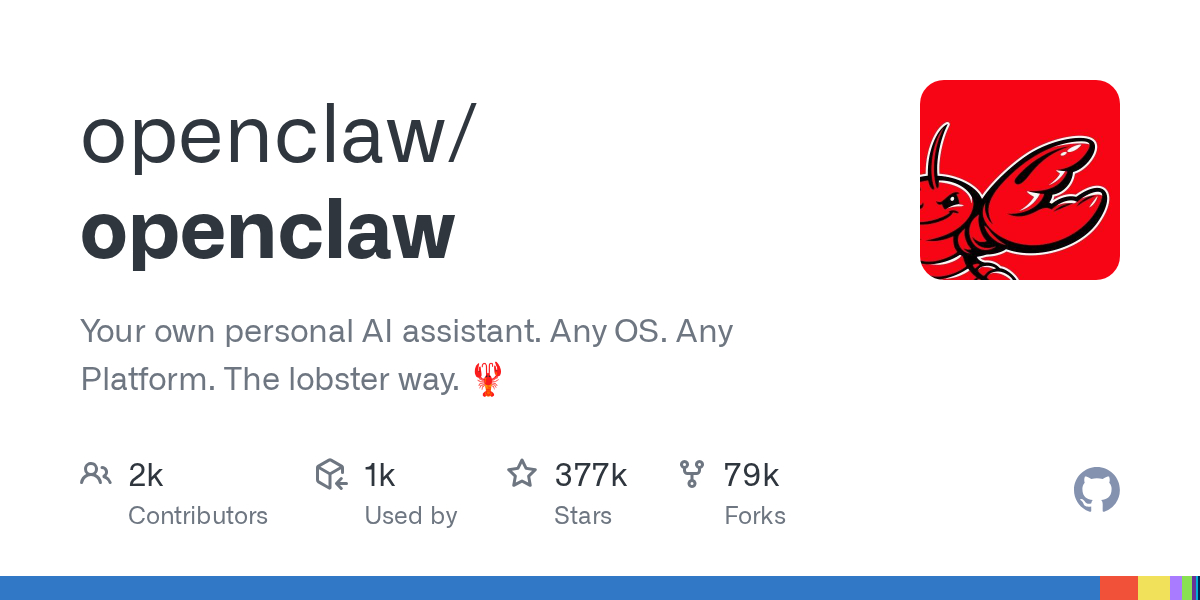
The repo numbers explain the pressure. The snapshot had openclaw/openclaw updated at 2026-06-06T00:49:49Z, pushed at 00:45:47Z, with 377,111 stars, 78,805 forks, and 7,807 open issues. Stars do not run software, but issue volume does tell you something: a lot of people are hitting edges. The recent PRs are not random polish. They are the edges of real usage showing through.
Recent queue items included #90798, “materialize sandbox skills for rw sandboxes,” opened at 01:03; #90797, “make memory pressure logs operator-actionable with units, percentage, and hint,” opened at 00:53; #90794, “materialize buffer-only message.send attachments,” opened at 00:40; #90793, “Fix OpenAI audio auth to use API keys,” opened at 00:37; #90792, “add unified Amazon AWS services plugin (Polly TTS, Transcribe STT, Nova Sonic voice),” opened at 00:29; and #90791, “prevent repeat talk normalization from derived speakerVoice fallback,” opened at 00:23. In the same cluster, #90790 targets Codex final-reply recovery and #90788 proposes durable planning for long-running goals.
This is what agent infrastructure actually looks like
Social media agent demos compress the category into magic: “I asked the agent to build a thing, and it built the thing.” Runtime queues tell the truth. The actual work is making sure attachments survive channel boundaries, memory pressure logs tell operators what to do, sandboxed skills appear where the runtime expects them, audio auth uses the right credential type, repeated voice output does not loop through fallback normalization, and final replies do not vanish when a client closes early.
None of those are glamorous. All of them are product. A buffer-only attachment bug is not “just messaging” if the agent was supposed to send a generated report, image, zip, or log artifact. A vague memory-pressure log is not “just logging” if the gateway is about to degrade and the operator has no unit, percentage, or remediation hint. An audio auth mismatch is not “just provider glue” if voice input and output are part of how users interact with the agent. Runtime hygiene is what turns capability into reliability.
The AWS services plugin is the one obvious feature-shaped item in the queue. Polly, Transcribe, and Nova Sonic extend text-to-speech, speech-to-text, and voice workflows inside the same agent control plane. That is useful. It also expands the permission and failure surface: AWS credentials, regional behavior, provider throttling, audio formats, latency, billing, and logs. The right question is not “can OpenClaw call AWS?” The right question is whether those calls are observable, permissioned, recoverable, and debuggable enough to leave enabled.
That is the recurring pattern in the queue. Every new surface creates governance debt. Plugins create install policy and provenance work. Channels create delivery and identity work. Audio creates credential and format work. Sandboxes create materialization and filesystem policy work. Memory creates pressure, compaction, and retrieval correctness work. Codex app-server creates turn-finalization and delivery semantics work. Long-running goals create planning-state and progress-accounting work.
Velocity is not a substitute for staging
OpenClaw’s velocity is impressive, but operators should not confuse velocity with safety. A minute-by-minute PR queue means maintainers are responsive. It also means important subsystems may be in motion between the version you run and the version being discussed. If your deployment depends on Codex, Slack, Telegram, Discord, audio, Android, sandbox skills, compaction, or provider routing, you should track the specific PRs touching that subsystem and wait for proof, merge status, and release tags before rolling forward.
This is especially true because some queue items interact. Codex finalization (#90790) is about preserving completed assistant output when the app-server client closes before terminal completion. Long-running goal planning (#90788) is about persisted plan state and mutation tools. Agent Teams lost-context reconciliation from the previous cycle (#90492) is about child output being usable even when the registry thinks execution context was lost. These are separate patches, but they all touch the same deeper question: when asynchronous agent work outlives the control state that started it, what does the parent runtime believe?
That belief becomes user-visible state. It decides whether the system delivers a reply, retries a subagent, marks a goal complete, burns another provider call, or tells a human the task failed. The model’s intelligence matters less if the runtime cannot account for lifecycle truth. A smart agent with sloppy bookkeeping is just a very expensive source of contradictions.
For teams running OpenClaw today, the practical checklist is boring and useful. Capture raw channel events for the channels you depend on. Test attachment delivery with in-memory buffers, not only file paths. Verify memory pressure logs include actionable units and thresholds. Exercise sandboxed skill installs in read-write sandboxes. Confirm audio providers use the expected credential path. Run Codex turns under client-close and restart conditions. If you use long-running goals or subagents, simulate stale state and verify terminal status against delivered output.
Also separate “merged” from “proved.” ClawSweeper has been consistently asking for real behavior proof on the PRs where unit tests are not enough, especially channel delivery and long-running runtime behavior. That is the right standard. Agent platforms cross too many layers for isolated tests to be the final word. A unit test can prove the function returns the right enum. It cannot prove a Slack user received the artifact after the gateway restarted.
The right kind of boring
The broader industry keeps looking for the next spectacular agent demo. OpenClaw’s queue suggests the more important story is less theatrical: make the runtime boring enough to trust. Boring means policy-aware plugin installs. Boring means channel delivery that survives real payload shapes. Boring means memory pressure logs an operator can act on at 2 a.m. Boring means provider auth paths that do not surprise users. Boring means final replies land once.
This is not a sign that OpenClaw is slowing down. It is a sign that the project is moving into the phase where operational correctness becomes the differentiator. The agent that wins is not the one with the longest tool list. It is the one that can sit between humans, models, credentials, channels, filesystems, and cloud services without making every edge case a user-facing mystery.
The editorial take: OpenClaw’s center of gravity has moved from “look what agents can do” to “make the runtime survive what users are already doing.” That is the right kind of boring. Ship that.
Sources: OpenClaw pull request queue, OpenClaw PR #90797, OpenClaw PR #90792, OpenClaw PR #90794