The  LGTM
  • Home
  • Agentic Coding
  • Claude Code
  • Codex
Sign in Subscribe
qwen

Qwen Code v0.19.2 Makes Local Agent Control Planes Explicit

Qwen Code’s latest preview is not trying to win a demo reel. That is the point. v0.19.2-preview.0 is a release about turning local-agent features into daemon contracts: model-callable MCP resources, persistent workspace permission rules, faster qwen serve startup, voice dictation in the Web Shell, stricter budget
24 Jun 2026 6 min read
qwen

QwenPaw Adds Release-Pipeline Proof Before Desktop Agents Reach Users

QwenPaw just made a release-engineering change that deserves more attention than most model launches. PR #5428 adds end-to-end desktop UI verification to the release pipeline. Not “does the repo build?” Not “did the frontend tests pass?” The verifier installs or extracts the packaged desktop artifact, launches the same shell users
24 Jun 2026 5 min read
openclaw

OpenClaw Finally Counts HTTP API Tokens Where Operators Spend Money

Agent cost dashboards have a simple failure mode: they look useful while quietly ignoring the path where the money is actually spent. OpenClaw PR #96227 fixes one of those failures. OpenAI-compatible HTTP ingress traffic was emitting model-call events, but not model.usage, the event that downstream consumers use for token
24 Jun 2026 4 min read
openclaw

OpenClaw’s Inline-Eval Patch Is the Boring Guardrail Vibe Coding Needs

The boring parts of agent security keep doing the real work. OpenClaw PR #96216 is not glamorous: it teaches strict inline-eval detection that python3.13 -c, /usr/bin/pypy3.10 -c, PHP -B/-E/-R, and R/Rscript -e/--exec are still inline code execution. That sounds obvious. It was
24 Jun 2026 4 min read
OpenClaw Is Closing the Policy Gap Between Who Asked and What Tool Runs
openclaw

OpenClaw Is Closing the Policy Gap Between Who Asked and What Tool Runs

Approval gates have a branding problem: they look like security controls, but too often they are just modal dialogs with incomplete context. OpenClaw PR #96211 is interesting because it goes after the field most agent platforms quietly hand-wave: requester origin. Not just “what tool is about to run,” but who
24 Jun 2026 4 min read
Microsoft’s Water Numbers Show the Hidden Constraint Behind Azure AI Scale
azure-ai

Microsoft’s Water Numbers Show the Hidden Constraint Behind Azure AI Scale

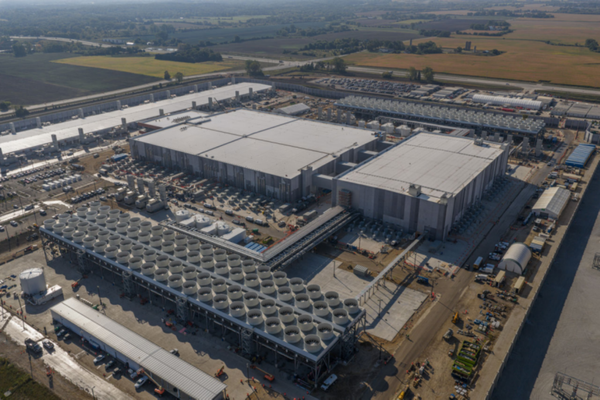
Microsoft’s latest water-stewardship post is easy to misfile as sustainability communications. Do not. It is an Azure AI infrastructure story with fewer model names and more physics. The numbers are the hook: Microsoft says average datacenter water use effectiveness improved by nearly 90% since early datacenter generations, falling from
24 Jun 2026 4 min read
Copilot CLI GA Makes the Terminal an Agent Workbench, Not Just a Prompt Box
azure-ai

Copilot CLI GA Makes the Terminal an Agent Workbench, Not Just a Prompt Box

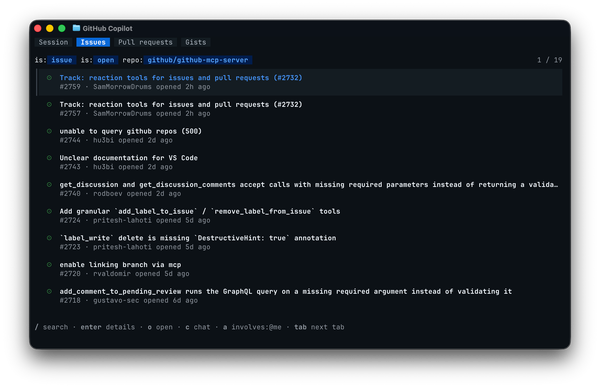
GitHub’s new Copilot CLI terminal interface is generally available, and the least interesting thing about it is that it has tabs. The interesting part is what those tabs imply: the terminal is becoming an agent workbench where GitHub context, MCP servers, skills, plugins, hooks, custom agents, approvals, and repo
24 Jun 2026 4 min read
Copilot BYOK Turns GitHub’s App Into a Model-Routing Front End for Azure OpenAI and Foundry
azure-ai

Copilot BYOK Turns GitHub’s App Into a Model-Routing Front End for Azure OpenAI and Foundry

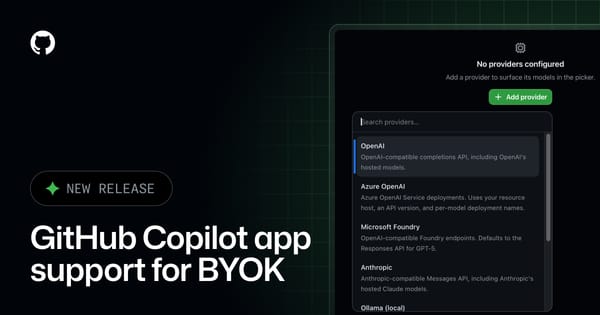
Bring-your-own-key support in the GitHub Copilot app sounds like a settings-page feature. It is not. It is GitHub quietly turning Copilot’s standalone app into a front end for whatever inference estate an engineering organization has already approved: Azure OpenAI, Microsoft Foundry, Anthropic, local models, private OpenAI-compatible gateways, and the
24 Jun 2026 4 min read
Langfuse 3.196 Treats Agent Observability Like Production Infrastructure, Not a Dashboard
ai-frameworks

Langfuse 3.196 Treats Agent Observability Like Production Infrastructure, Not a Dashboard

Langfuse 3.196 is not one big feature. It is a pile of boundary fixes. That is the story. The release, published June 24 at 2026-06-24T08:13:37Z, continues Langfuse’s evolution from “LLM observability dashboard” into production data infrastructure for agent systems. The difference matters. Dashboards can tolerate rough
24 Jun 2026 5 min read
OpenAI Agents SDK 0.17.7 Fixes the Runtime Edges Multi-Agent Apps Actually Trip Over
ai-frameworks

OpenAI Agents SDK 0.17.7 Fixes the Runtime Edges Multi-Agent Apps Actually Trip Over

The interesting part of OpenAI Agents SDK 0.17.7 is not that it adds some shiny new agent capability. It does not. The interesting part is that it fixes the boring failure modes that show up after the demo architecture diagram meets streaming providers, Realtime handoffs, SQLite sessions, guardrails,
24 Jun 2026 5 min read
Qwen Code’s Nightly Adds Hard Stops Where Auto Mode Used to Ask the Model Nicely
ai-frameworks

Qwen Code’s Nightly Adds Hard Stops Where Auto Mode Used to Ask the Model Nicely

Auto mode is where coding-agent safety stops being a slide and starts being a file-system problem. Qwen Code’s June 24 nightly is worth reading less as a feature release than as a small constitutional amendment: some commands are too destructive to leave to a model classifier, even a good
24 Jun 2026 5 min read
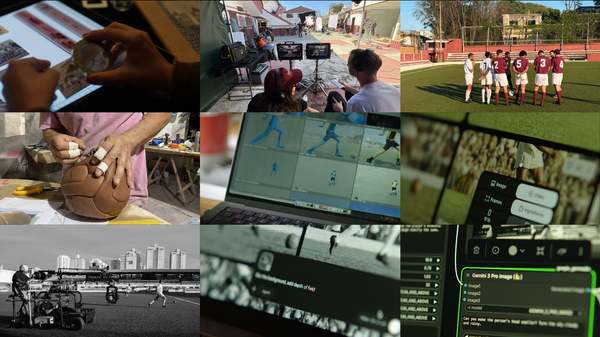
DeepMind’s Pelé Reconstruction Is a Consent Test for Generative Memory
google-ai

DeepMind’s Pelé Reconstruction Is a Consent Test for Generative Memory

The safest way to read Google DeepMind’s Pelé reconstruction is not as a sports clip. It is a governance test with a football attached. Google took a legendary moment that was never filmed — Pelé’s August 2, 1959 “Gol da Rua Javari,” remembered for three consecutive sombreros without the
24 Jun 2026 5 min read
← Newer Posts Page 9 of 141 Older Posts →
The LGTM © 2026
  • Sign up
Powered by Ghost