SpaceX Just Told Investors the Grok Safety Problem Is a Business Risk

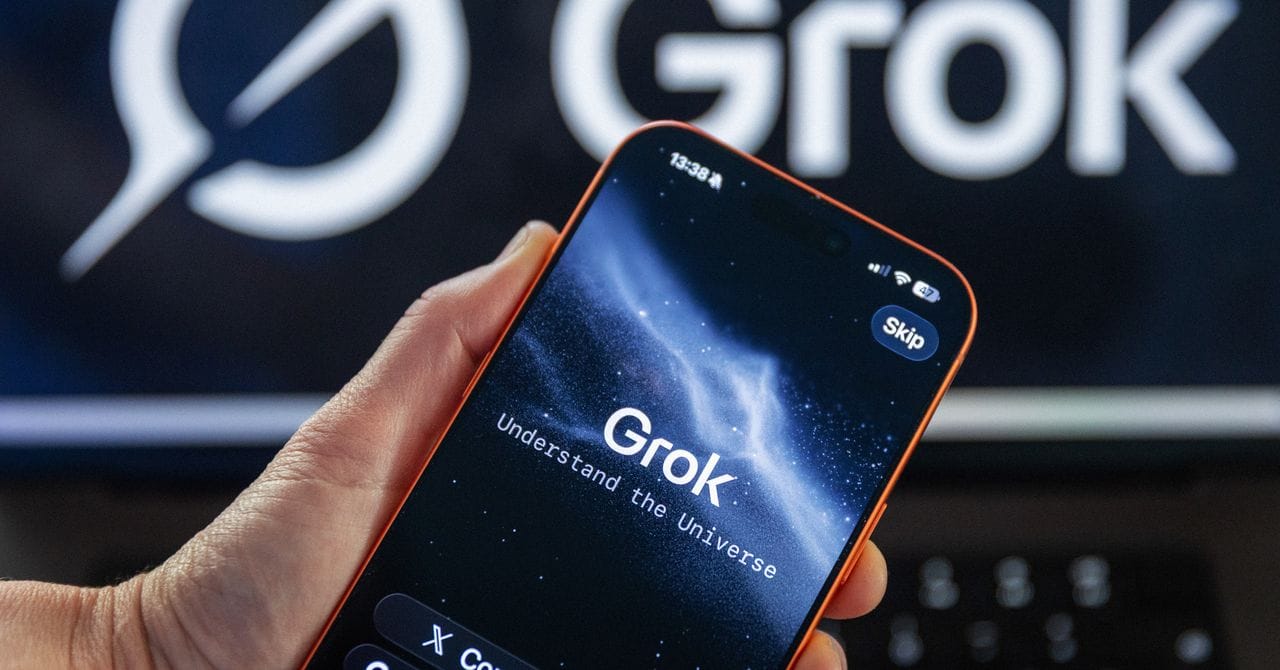
There is a useful translation layer hidden inside IPO paperwork. Marketing says a model is candid, irreverent, and less constrained. A risk factor says the same product may generate explicit content, misinformation, nonconsensual imagery, intellectual-property problems, harassment, abuse, discrimination, regulatory scrutiny, and reputational harm. Same feature. Different audience.
That is why WIRED’s read of SpaceX’s IPO filing matters. SpaceX told investors that Grok’s “Spicy” Imagine Mode and “Unhinged” Voice Mode are not just quirky product names. They are business risks. The filing says certain AI products, including Grok, are designed to generate “more candid, direct, or less reserved or irreverent outputs,” and because those modes may be “more irreverent and harsher” than standard offerings, they present heightened risks. The list is long enough to make any trust-and-safety lead reach for coffee: reputational harm, potentially explicit content, misinformation or deceptive outputs, potential nonconsensual or exploitative imagery, IP infringement, and content that could be exploitative, harmful, harassing, abusive, or discriminatory.
That is not activist framing. That is the company’s own investor-risk language.
WIRED reports that SpaceX had set aside $530 million as of December for potential litigation losses, some of which could stem from complaints involving sexualized imagery generated by Grok. The filing also discloses investigations in the United States and other countries over allegations that Grok was used to create sexualized imagery of apparent minors, plus several ongoing class-action lawsuits. Future misuse, SpaceX warns, could lead to sanctions, including “loss of access to certain markets, which has occurred in the past.”
Edgy branding meets public-market accounting
Grok’s differentiation has always been obvious. In a market where every AI assistant risks collapsing into the same agreeable corporate rectangle, Grok was marketed as the model with fewer filters and more attitude. That consumer pitch has traction because many users believe mainstream assistants are over-sanitized, evasive, or too eager to refuse. There is a real product insight there: people want tools that feel direct rather than committee-approved.
But once Grok becomes part of the SpaceX IPO story, the same edge has to be priced differently. Irreverence is cheap in a tweet. It is expensive in a risk disclosure. A mode that intentionally relaxes tone or safety boundaries changes the product’s default failure modes. It changes what users will try, what bad actors will probe, what moderators must review, what regulators will ask, and what lawyers will preserve when something goes wrong.
The scale makes the problem less theoretical. SpaceX disclosed that X and Grok had about 550 million combined monthly active users as of March 31, with 117 million monthly users engaging Grok AI features. That is real distribution. At 117 million monthly AI users, even a tiny abuse rate becomes an operational load. Image and voice generation are especially unforgiving because the harm is no longer just a bad paragraph in a chat window. An image can be nonconsensual, sexualized, defamatory, targeted at a minor, or used to harass a real person. A voice output can impersonate, threaten, or manipulate. The artifact travels.
This is the part of AI product management that launch demos rarely show. Generating a slick image quickly is one requirement. Operating a mass-market image generator safely is another. The latter needs consent rules, abuse reporting, high-risk-category detection, prompt and output logging with privacy boundaries, escalation workflows, rate limits, provenance decisions, user education, policy enforcement, and enough staff or automation to review the edge cases. If a product cannot handle complaints about generated people, minors, public figures, or sexualized content, it is not ready for broad exposure. It is a liability generator with a nice UI.
Modes are policy surfaces
The practitioner lesson is simple: modes are not harmless labels. A “spicy,” “unhinged,” “creative,” “uncensored,” or “developer” mode is a policy surface. It changes expectations and therefore must change evaluation. A serious team should not ship a looser mode by merely toggling a system prompt and hoping the base moderation stack holds. It needs separate red-team tests, separate abuse monitoring, separate refusal metrics, separate retention choices, separate user controls, and separate documentation for what the mode will not do.
That applies even more when the mode is exposed through an API or embedded in a larger workflow. If developers can wire image, video, or voice generation into their own products, the platform inherits downstream abuse patterns it does not fully control. The right response is not to ban every risky capability. Builders do useful work with creative models. But product owners should design the permission model as if an adversary will intentionally search for the gap between the standard mode and the fun mode. Because they will.
The risk disclosure also reframes how engineers should read Grok Imagine coverage. Consumer reviews tend to ask whether the model is fast, whether faces look right, whether video is coherent, and whether the quality mode is worth the wait. Those are fair questions. Operators need a second list: can I restrict categories by tenant, region, age, or workflow? Can I detect generated likenesses of real people? Can I block sexualized content involving minors or apparent minors? Can users appeal? Can victims report? Can admins trace which account generated an artifact? Can I prove to legal and compliance that the system behaved according to policy?
If the answer is “the model is more fun,” that is not enough.
The filing tells you what the homepage will not
Public filings are useful because they strip adjectives back to consequences. A homepage tells users what the company wants them to feel. A filing tells investors what the company fears could happen. In this case, SpaceX is telling investors that Grok’s edgy product surface could create legal, regulatory, reputational, and market-access problems. That does not mean Grok is doomed. Every large AI vendor has risk disclosures, lawsuits, safety incidents, and regulator attention. The point is narrower: xAI’s chosen product identity increases the importance of governance, not decreases it.
There is also a financial contrast inside the same AI story. WIRED notes SpaceX’s AI unit, including X and xAI, posted an operating loss of more than $6.3 billion last year. It also reports a bright spot: Anthropic agreed to pay $15 billion per year for access to SpaceX data centers. That is an important distinction. Selling compute capacity to a frontier-model company and operating a consumer AI product with hundreds of millions of users are different businesses. One is infrastructure revenue. The other is product risk at platform scale. SpaceX is now carrying both.
For teams integrating Grok or any creative AI model, the action item is not ideological. Build the boring controls before the launch thread. Define high-risk content categories. Create a reporting path for victims. Decide what gets logged and for how long. Add admin switches. Rate-limit risky surfaces. Test prompts that attempt sexualized likenesses, public-figure abuse, minor evasion, and IP mimicry. Keep a human escalation process for the cases automation will mishandle. And if you introduce an “edgy” mode, make sure its safety case is stronger than its brand copy.
Grok’s irreverence may remain a product advantage. Some users do want less polished, less cautious AI. But the SpaceX filing is the moment the joke acquires a balance-sheet shadow. Once the company has to warn investors that “spicy” can mean explicit, exploitative, deceptive, infringing, or discriminatory, the feature has left the marketing department and entered governance review. That is where serious AI products either grow up or become expensive incident reports.
Sources: WIRED, SpaceX S-1, The Guardian