SpaceX’s Grok Bet Is No Longer a Chatbot Story. It’s a Capital Allocation Story.

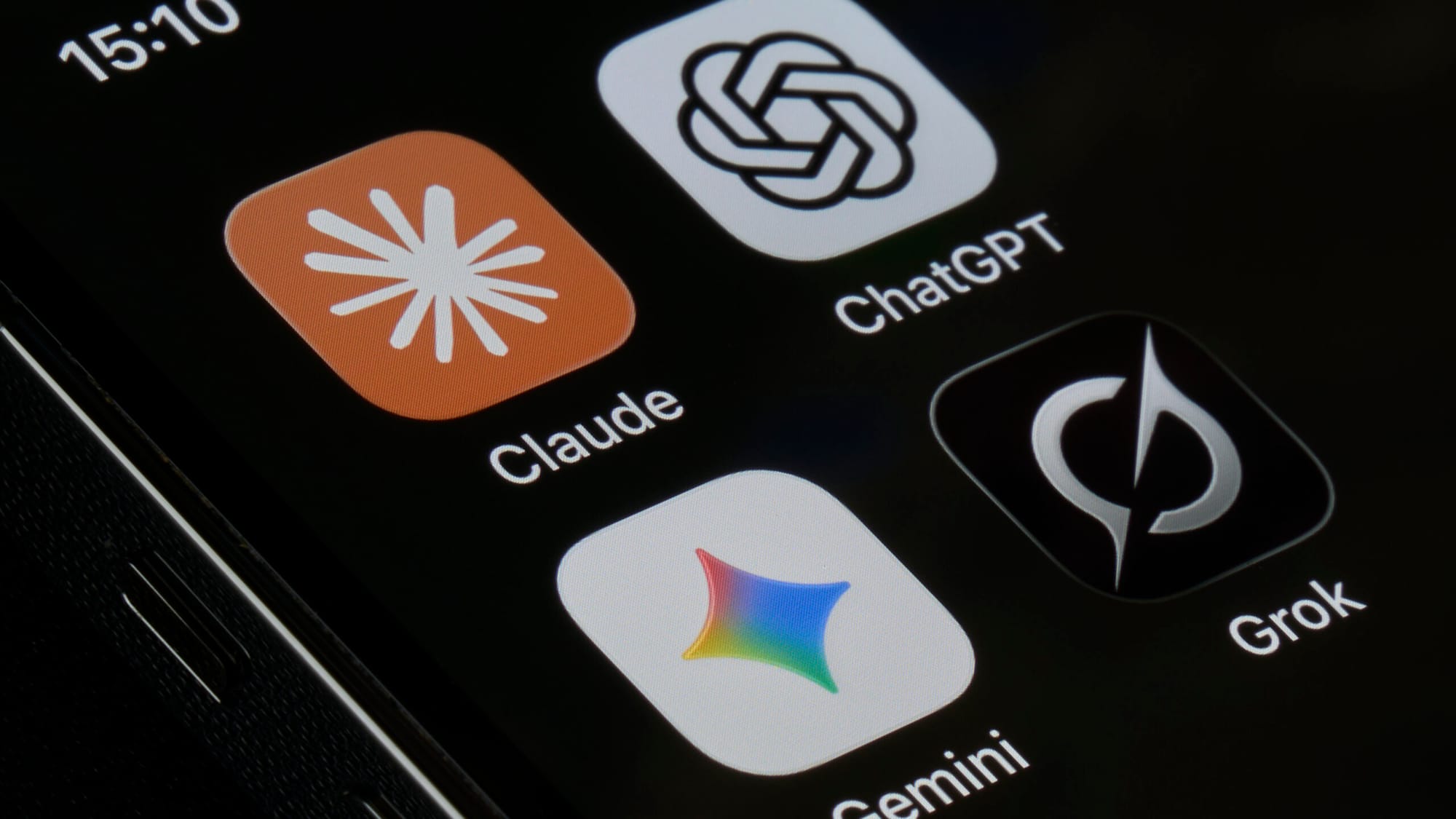
SpaceX’s AI story is no longer about whether Grok can produce a funnier answer than ChatGPT on X. That was the consumer phase. The IPO filing moves xAI into a harsher category: capital allocation. SpaceX is telling public-market investors that AI is not a bolt-on product, not a sidecar to Starlink, and not just Elon Musk’s chatbot habit. It is the largest piece of the company’s future market.
That makes the useful question much less flattering: does xAI have a product, infrastructure base, and enterprise trust story strong enough to justify the spending curve SpaceX has now put in writing?
Ars Technica reads the filing as a pivot point. After SpaceX absorbed xAI earlier this year, the company’s S-1 described “the largest actionable total addressable market in human history”: $28.5 trillion in total, including $26.5 trillion assigned to AI. Space and connectivity — the businesses people actually associate with SpaceX — are smaller in the framing: $370 billion for space and $1.6 trillion for connectivity.
That is not a forecast you can hand-wave past. Ars notes the AI figure approaches U.S. nominal GDP, cited at nearly $32 trillion in the first quarter of 2026, and towers over outside AI-market estimates. Gartner has projected worldwide AI spending of $3.3 trillion by 2027; Citigroup has suggested the market could pass $4.2 trillion by 2030. SpaceX is not merely saying “AI is big.” It is saying AI is the main event.
The TAM slide has to survive contact with usage data
The uncomfortable part is that Grok’s distribution and Grok’s adoption are telling different stories. The filing says X/Grok had more than 1.3 billion supported accounts active in the twelve months ended March 31, 2026, about 550 million monthly active users, roughly 350 million daily posts, and around 117 million monthly users touching Grok AI features. That is serious top-of-funnel reach. Most AI startups would trade a kidney for that placement.
But usage that brushes against a feature is not the same as usage people pay for, standardize on, or trust with work. Ars cites AppMagic survey data of 260,000 U.S. consumers and workers showing only 0.174% paid to use Grok in Q2 2026, versus more than 6% paying for ChatGPT. Enterprise Technology Research survey data cited by Ars shows Claude usage among surveyed companies rising from 21% to 48% between 2025 and 2026, Gemini rising from 27% to 40%, and Grok moving from 4% to 7%.
Reuters supplied the more brutal enterprise-government datapoint this week: among more than 400 vendor-named civilian federal AI use cases, it found only three public mentions involving xAI or Grok. That matters because government is a slow, annoying, paperwork-heavy market — exactly the kind of market that exposes whether an AI product can clear security, procurement, records, policy, and user-adoption hurdles. If the pitch is enterprise applications worth $22.7 trillion, the evidence cannot stop at “it is integrated into X.”
This is the first practitioner takeaway: defaults create exposure, not trust. Engineers have seen this pattern inside companies for years. A tool gets shipped into the left rail, the command palette, the IDE, or the admin console. Everyone “has access.” Then the real usage data shows people still copy work into the tool they trust. Distribution is a growth channel. It is not a substitute for product-market fit.
Owning GPUs is not the same as owning the workload
The infrastructure story is just as revealing. The S-1 defines a sprawling AI platform around Grok API, Grok Business, Grok Enterprise, Grok Voice, Imagine, xAI Gov, Macrohard, COLOSSUS, and COLOSSUS II. SpaceX says xAI owns and operates what it believes are the largest AI training data center clusters on Earth and argues that AI competition will depend on control of the physical stack: chips, data centers, and power.
That thesis is directionally right. Frontier AI has become an operations business as much as a model-design business. The winners will not be decided only by benchmark screenshots; they will be decided by utilization, power contracts, cluster reliability, inference margins, tool ecosystems, and whether developers can build products on top of the models without discovering a new footgun every sprint.
But infrastructure only compounds when it maps to demand. Morningstar/PitchBook reports SpaceX posted a $4.30 billion net loss on $4.70 billion in revenue in Q1 2026, with $29.1 billion in debt and $10.10 billion in quarterly capex. Of that capex, $7.72 billion was attributed to artificial intelligence. The AI segment reportedly lost $2.5 billion in Q1 and $6.4 billion in 2025.
Those numbers do not make the strategy wrong. They make the burden of proof higher. A giant cluster is a moat if it is filled with high-value training runs, sticky inference workloads, and customers who cannot easily leave. It is a bonfire if the workload fit is wrong or demand is still theoretical.
Ars also notes that SpaceX struck a deal giving Anthropic use of the entire Colossus compute capacity. Tom’s Hardware has reported that Colossus 1’s mixed Nvidia GPU architecture may be inefficient for Grok training but useful for Claude inference, while SpaceX prepares a more unified Blackwell-only Colossus II for frontier training. That is not necessarily an embarrassment — inference revenue is real money — but it complicates the “we own the AI stack” narrative. If your flagship training cluster is best monetized by a rival’s inference workload, the asset is valuable, but the strategic story is messier than the slide suggests.
For platform teams, this is the scaled-up version of a familiar mistake: buying infrastructure before stabilizing the workload. Companies do it with Kubernetes clusters, vector databases, GPU reservations, and “AI platforms” that arrive before the use cases. SpaceX is doing it at a size where the rounding error has its own bankers.
Macrohard is an evals problem wearing a sci-fi jacket
The filing’s more ambitious language points toward agentic software work. Macrohard is described as an agentic AI platform that can emulate digital workflows and augment human operation of computers with autonomous agents. Terafab is described as a chip-manufacturing initiative with a long-term goal of producing one terawatt of compute hardware per year.
Both ideas are more concrete than a random demo and less proven than a business. A fully AI-operated software company is not primarily a model problem. It is a runtime problem: permissions, audit logs, reversible actions, sandboxing, identity, billing, evals, observability, escalation paths, incident response, and liability when the agent does the wrong thing with confidence. The same is true for enterprise Grok. The interesting checklist is not “does it answer cleverly?” It is whether it can operate inside a company without becoming an unmanaged actor with access to systems nobody audited.
That is where xAI’s edgier consumer product surface becomes relevant to the capital story. SpaceX’s filing warns that Grok modes such as “Spicy” Imagine Mode and “Unhinged” Voice Mode carry risks including explicit content, deceptive outputs, nonconsensual or exploitative imagery, IP infringement, harassment, abuse, discrimination, regulatory scrutiny, litigation, advertiser backlash, and distribution limits. In consumer chat, that might look like brand differentiation. In enterprise infrastructure, it looks like a governance backlog.
Builders evaluating Grok or xAI APIs should therefore ask boring questions first. What data is retained? What enterprise controls exist? Are audit logs usable? How do tool calls get permissioned? What are the rate limits and pricing commitments? How are image, voice, and video abuse reports handled? Is FedRAMP or regulated-market readiness real or aspirational? Does Grok beat Claude, Gemini, ChatGPT, or local models on your actual workload, with your failure modes, not on someone else’s benchmark?
The editorial read is simple: SpaceX has converted xAI from a model-news beat into a capex-and-utilization beat. The company may have unusual advantages — Starlink distribution, launch capability, X data, access to capital, and a management culture willing to place enormous bets. But enormous bets still have to resolve into boring evidence: retained customers, trusted APIs, safe media surfaces, high utilization, and compute that earns more than it burns.
Until then, the right posture is not dismissal. It is skepticism with a spreadsheet open. Grok does not have to beat every incumbent tomorrow. But if SpaceX wants investors and builders to treat AI as the largest market in company history, xAI has to prove it is building infrastructure — not just buying infrastructure while waiting for the product to catch up.
Sources: Ars Technica, SpaceX S-1 filing, Morningstar/PitchBook, Reuters, Tom’s Hardware