The Cheapest Local AI GPU Story Is Really About Old NVIDIA Data-Center Silicon Finding a Second Life

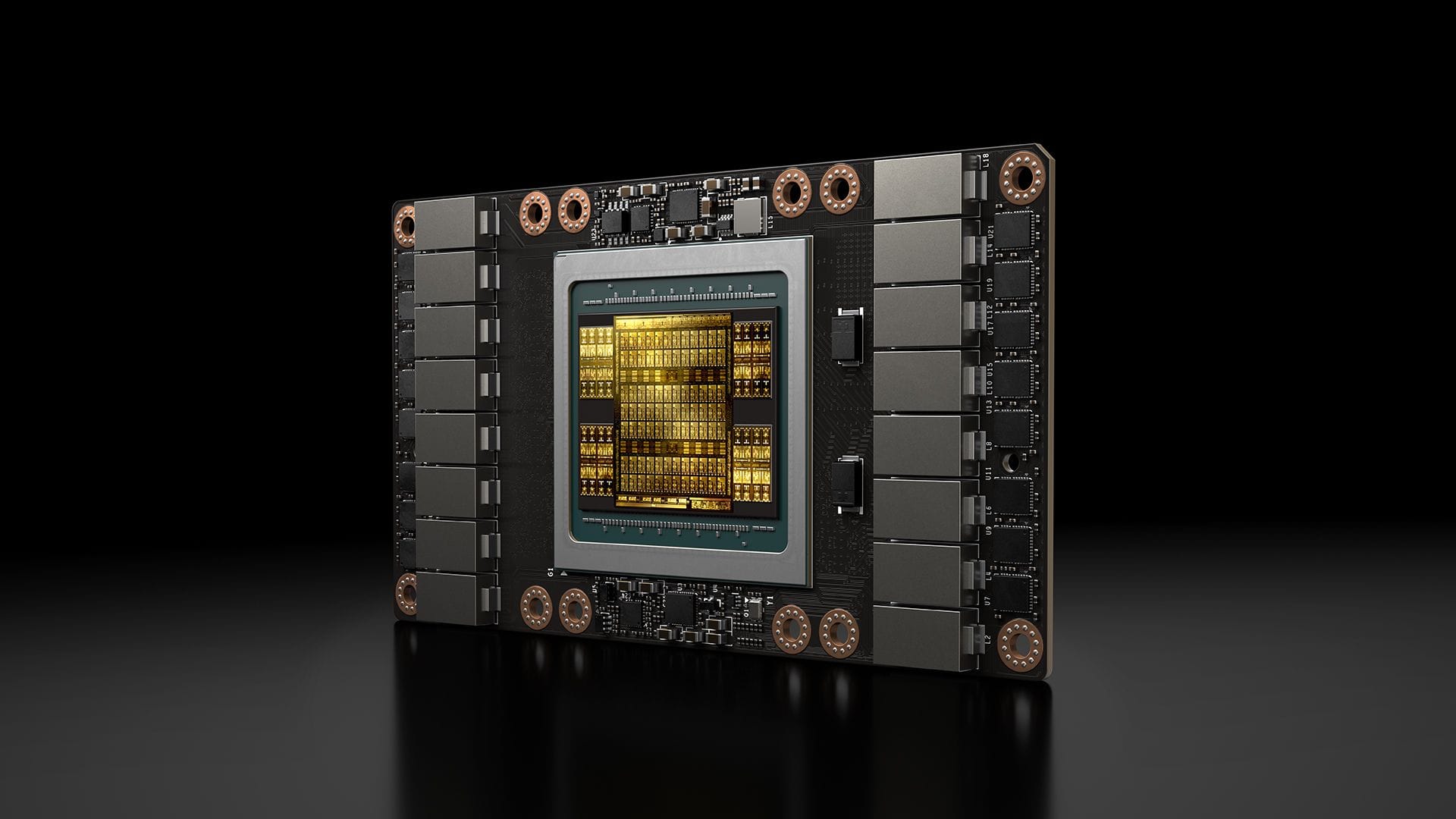
The most interesting local-AI GPU this week is not new, friendly, or remotely normal. It is a 2017 NVIDIA Tesla V100 SXM2 server accelerator, pulled out of the data-center afterlife, bolted to an SXM-to-PCIe adapter, cooled with a 3D-printed duct, and asked to run Ollama like it was born for a homelab.
Tom’s Hardware covered the Hardware Haven experiment because the numbers are genuinely awkward for the modern midrange GPU market. A roughly $100 used V100 SXM2 plus a roughly $100 adapter produced about 130 tokens per second on Ollama’s gpt-oss-20B test, compared with roughly 90 tokens per second on a Radeon RX 7800 XT in the creator’s comparison. On a Gemma test, the V100 reached about 108 tokens per second, while an RTX 3060 12GB landed around 76.
That does not mean everyone should start buying weird server modules on eBay. It means the local inference market is learning an old lesson from infrastructure: retired data-center hardware can be bad at convenience and excellent at the one workload you care about.
Memory bandwidth ages better than marketing
The tested V100 is not magic. It is an older NVIDIA data-center GPU with 16GB of HBM2 and 900 GB/s of memory bandwidth. Those two numbers explain most of the story. Local inference is often constrained less by shader glamour and more by whether the model fits, how quickly weights and activations move, and whether the software path uses the hardware efficiently. The V100 lacks modern niceties, but it was built for throughput, and throughput still counts.
The setup is exactly as cursed as it sounds. SXM2 V100 modules were not designed to drop into consumer motherboards. Hardware Haven used an SXM2-to-PCIe x16 adapter with dual 8-pin PCIe power connectors and multiple PWM fan headers. The adapter did not solve cooling, so the creator designed and 3D-printed an 80mm fan shroud and attached a Noctua fan to pull air through the heatsink. There is no display output. There is no consumer-card plug-and-play story. There is a server accelerator being politely tricked into desktop duty.
That is why the result is useful rather than universally recommendable. The V100 beat or challenged newer midrange hardware in Ollama tests because local LLM serving rewards exactly the traits old data-center NVIDIA parts still have: memory bandwidth, enough VRAM for useful quantized models, mature CUDA support, and a software ecosystem that tends to optimize NVIDIA first. Ollama’s gpt-oss page positions gpt-oss-20B as a lower-latency local/specialized model, with MXFP4 quantization enabling it to run on systems with as little as 16GB of memory. A 16GB V100 is therefore not an absurd target. It is awkward, but technically coherent.
The RTX 3060 is boring for a reason
The RTX 3060 12GB comparison is the one local-AI builders should pay attention to. For years, the 3060 has been the default cheap recommendation because it is easy to buy, easy to power, easy to cool, and supported by the same NVIDIA software stack that makes half the AI ecosystem work. In Hardware Haven’s Gemma test, the V100 delivered about 108 tokens per second versus about 76 for the 3060. Power draw was higher — 293W for the V100 versus 235W for the 3060 — but the tokens-per-watt math still came out close enough to be interesting: roughly 0.37 tokens/sec/watt for V100 and 0.33 for RTX 3060.
The power-limited result is even more provocative. Limiting the V100 to 100W produced about 95 tokens per second at a reported 170W system/GPU draw, while a similarly limited RTX 3060 produced about 68 tokens per second at 171W. That works out to roughly 0.55 tokens/sec/watt for the V100 and 0.39 for the 3060. The old accelerator is not just surviving the comparison; under that workload, it is embarrassing a beloved budget card.
But the boring card still has a case. The V100 idled around 45W versus 35W on the RTX 3060. It requires adapters, physical fit checks, thermal improvisation, and comfort with unsupported weirdness. If you are equipping a team, the 3060 remains the kind of part you can put in a procurement spreadsheet without explaining why your AI workstation needs printed plastic. If you are building a homelab inference appliance and enjoy measuring fan curves, the retired accelerator starts to look rational.
This distinction matters because “best local AI GPU” has become a lazy phrase. Best for what? A desktop assistant? A private coding agent? A Frigate NVR box? A batch embedding worker? A weekend benchmark rig? The same Hardware Haven project reportedly found the V100 stronger than the RTX 3060 in a Frigate object-detection setup, but the old Intel N100 mini PC remained dramatically more power-efficient for camera monitoring: 26W across six cameras versus the V100 pulling over 100W monitoring two. A GPU can win the benchmark and lose the electricity bill.
The secondhand accelerator market is now part of the stack
The broader signal is that local AI hardware is no longer just a consumer GPU story. Decommissioned NVIDIA data-center silicon is entering the decision tree for builders who care more about tokens per dollar than warranty comfort. V100s, P100s, A-series cards, and other retired accelerators will keep appearing in odd local inference builds because the AI boom created demand for exactly the traits data centers used to pay a premium for: memory, bandwidth, and CUDA compatibility.
That creates a procurement trap. Once a niche part gets documented as a hidden gem, the deal often vanishes. Tom’s Hardware reported the 16GB V100 setup around $200 total, while 32GB V100 variants were closer to $500 at the time of writing. Those prices are not laws of nature. They are secondhand-market weather. A popular YouTube video and a round of tech press coverage can move that market faster than any buyer’s guide can stay current.
So the durable advice is methodological, not SKU-specific. Price the whole system, not the chip. Include the SXM-to-PCIe adapter, cooling, power supply headroom, case airflow, motherboard compatibility, driver support, idle draw, and your time. Benchmark your actual workload: Ollama chat, coding-agent tool calls, embeddings, image generation sidecars, Frigate detection, or batch inference. Do not generalize from one model and one prompt. Tokens/sec on gpt-oss-20B does not automatically predict behavior on Qwen, Gemma, multimodal workloads, or structured agent outputs.
Also document everything if you go down this path. Exact adapter model, driver version, kernel version, power limit, thermal behavior, fan curve, BIOS quirks, and model settings are not trivia. They are the difference between a reproducible build and a comment thread full of anecdotes with fans attached.
LGTM’s take: old NVIDIA server GPUs can be surprisingly good local inference parts because memory bandwidth and CUDA support age better than product segmentation. But cheap accelerators are only cheap if you count the whole bill. The V100 mod is a smart experiment, not a universal recommendation. For hackers, it is a neat way to turn data-center leftovers into useful compute. For teams, it is a reminder to separate convenience, reliability, and raw throughput before calling anything a bargain.
Sources: Tom’s Hardware, Hardware Haven YouTube, Ollama gpt-oss, Frigate docs, NVIDIA Tesla V100 architecture context