JetPack 7.2 Makes Edge Agents Look Less Like Demos and More Like Embedded Systems

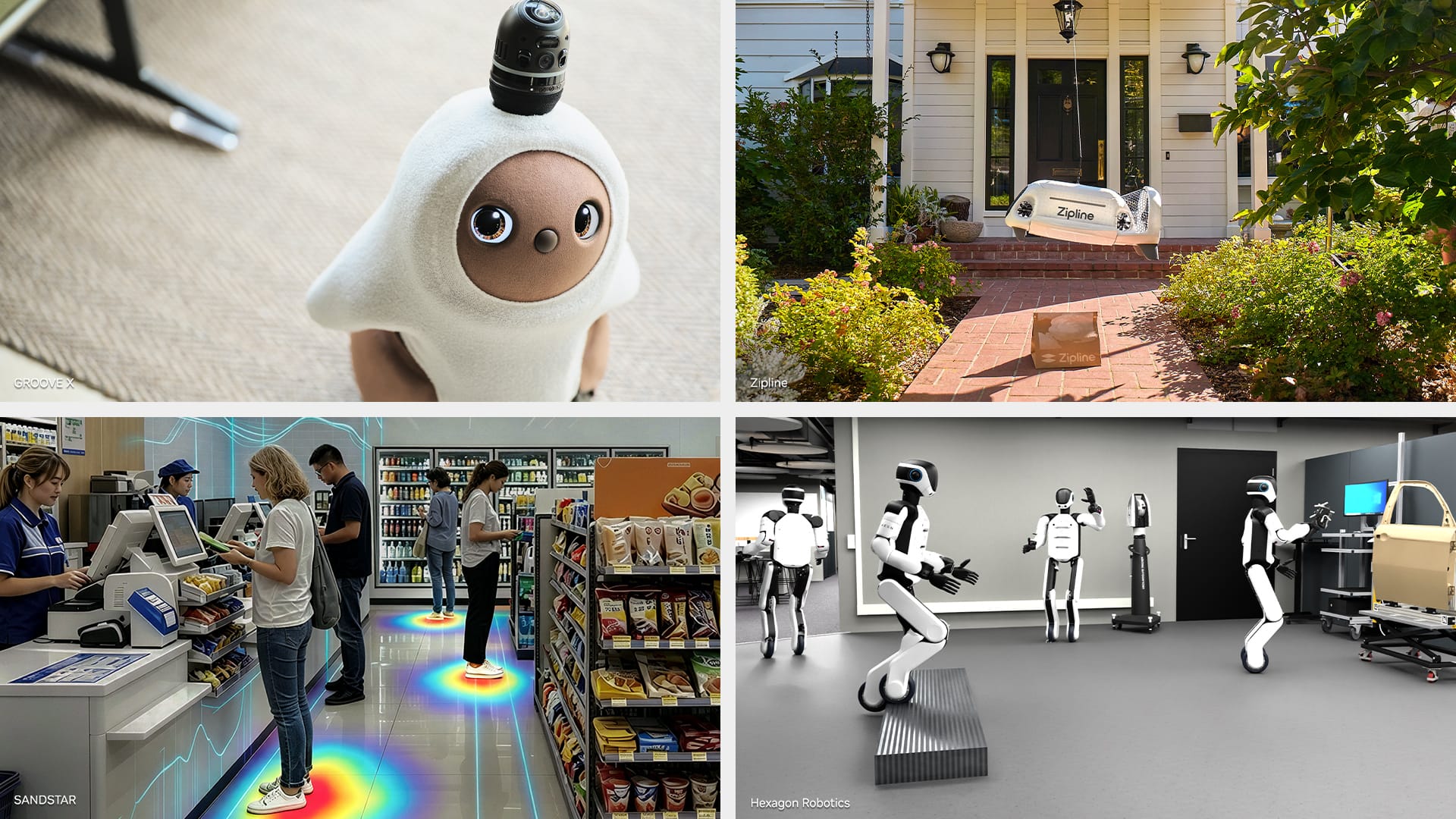
“Agentic AI at the edge” is exactly the sort of phrase that makes engineers check whether the nearest exit is behind them. But JetPack 7.2 is not interesting because NVIDIA found another place to staple the word agentic. It is interesting because the release focuses on the unglamorous parts that decide whether edge AI survives outside a demo: reproducible operating-system builds, memory budgets, GPU partitioning, model benchmarking, deployment configuration, and support for existing hardware.
NVIDIA announced JetPack 7.2 and NemoClaw support on Jetson, extending CUDA 13 to Jetson Orin, adding official Yocto Project support, bringing Multi-Instance GPU support to Jetson Thor, and giving Jetson AGX Orin 32GB a Super Mode performance bump. The blog headline says Jetson is bringing agents to the physical world. The builder translation is better: NVIDIA is making embedded AI systems look less like one-off lab rigs and more like production Linux platforms with resource isolation.
That distinction matters. A robot, traffic camera, retail vision system, medical device, or factory inspection box is not a notebook attached to a webcam. It is a board, a carrier design, a kernel, camera drivers, containers, fleet update paths, thermal constraints, watchdogs, field diagnostics, power profiles, memory carveouts, and an operator who will not tolerate “the agent was thinking” as a root-cause analysis. Physical AI is a systems problem wearing a model-shaped hat.
The useful release note is deterministic deployment
JetPack 7.2’s biggest practical move is official Yocto support. Yocto is not the flashy part of the announcement, which is how you know it is probably important. NVIDIA says JetPack 7.2 provides validated recipes and reference images for Jetson developer kits, with NVIDIA leading roadmap contributions, CI/CD, software quality assurance, and releases through the OE4T layer.
For embedded teams, the benefits are specific: smaller images, fewer unnecessary services, reproducible builds, easier debugging, and a better path through certification-heavy environments. That is especially relevant for medical, industrial, robotics, and smart-city deployments where teams need to know exactly what is in the image running in the field. Ubuntu L4T is convenient for development; Yocto is often where production teams go when convenience starts costing memory, boot time, attack surface, or auditability.
NVIDIA’s partner list around Yocto — Balena, Konsulko Group, Neurealm, Peridio, RidgeRun, Wind River, AAEON, ASUS, Avermedia, Connect Tech, YUAN, and others — tells the same story. This is less about one SDK feature and more about turning Jetson into a production OS ecosystem. If you are shipping hundreds or thousands of edge devices, the operating system is not plumbing. It is part of the product.
MIG on Jetson Thor is the right kind of boring
The second important piece is Multi-Instance GPU support on Jetson Thor. JetPack 7.2 can partition Thor’s integrated Blackwell GPU into two isolated instances: a larger AI and graphics partition with 12 SMs and 1,536 CUDA cores, and a second compute partition with 8 SMs and 1,024 CUDA cores for robotics, control, perception, or safety workloads. NVIDIA pairs that with the preemptible real-time kernel story from JetPack 7.
This is the part physical-AI teams should watch closely. Mixed-criticality workloads are normal at the edge. A humanoid robot or autonomous machine may run perception, sensor fusion, planning, control, safety monitoring, visualization, and a best-effort reasoning model on the same SoC. If a generative model steals enough resources to add jitter to a perception loop, the architecture is broken no matter how impressive the model looked in a launch video.
GPU partitioning is not glamorous, but it is exactly the type of primitive that makes “agents on robots” less reckless. Developers can assign applications, containers, and services to specific partitions using CUDA runtime controls and NVIDIA Container Toolkit integration. In practical terms: keep latency-sensitive perception and safety paths isolated from exploratory inference, vision-language reasoning, or operator-assist workflows. The agent should be the passenger until it has earned a driver’s license.
There is a useful analogy here to cloud infrastructure. Nobody serious runs every workload as root on the same unbounded machine just because the CPU is fast. Edge AI needs the same maturity curve: quotas, partitions, monitoring, logs, and failure domains. MIG on Jetson Thor is one of those primitives. Teams still have to design the system correctly, but at least the hardware/software stack is offering a boundary.
The agent skills are infrastructure-as-code, not fairy dust
JetPack 7.2 also introduces Jetson agent skills: repeatable, agent-executable instructions for Jetson Linux customization, memory optimization, model benchmarking, deployment configuration, BSP work, DeepStream pipelines, and Metropolis Video Search and Summarization workflows. NVIDIA’s developer post describes these skills as defining which tools to call, what outputs to produce, and how to validate results.
That is the right shape. Agents are most useful when they automate constrained, reviewable workflows with explicit artifacts. BSP customization, memory trimming, benchmarking, and deployment configuration are not glamorous tasks, but they are exactly the chores that slow down embedded teams and create fragile tribal knowledge. If an agent can produce a carrier-board configuration, benchmark candidate models on target hardware, remove redundant services, tune bootloader memory carveouts, and emit a reviewable diff, that is real productivity.
The caution is equally real. Treat these skills like infrastructure-as-code dependencies. Pin versions. Inspect generated changes. Log tool calls. Require human review for anything that touches clock settings, fan curves, power profiles, kernel config, bootloaders, memory reservations, BSP changes, or deployment images. A coding agent that breaks a unit test is annoying. An edge-agent workflow that ships a bad power profile to a factory fleet is a support incident with thermal paste.
The early customer numbers are the release’s strongest practical evidence. SandStar reports nearly 40% memory optimization, letting it migrate from 16GB to 8GB Jetson Orin NX devices for smart retail workloads. NoTraffic says CUDA overhead optimization through static compilation and targeted kernel pruning reduced memory usage by 29%. Those are not vanity metrics. Memory footprint directly affects bill of materials, device class, thermal envelope, and whether a model can coexist with the rest of the system.
Jetson AGX Orin 32GB also gets a meaningful Super Mode update: GPU frequency rises from 930 MHz to 1.3 GHz, power envelope can go to 60W, and AI performance moves from 200 TOPS to 241 TOPS — more than a 20% increase. NVIDIA says the 32GB module approaches Orin 64GB performance while cutting module cost by 45%. The token/sec examples are modest but practical: Nemotron3 Nano 30B A3B moves from 31 to 37 tok/s on Orin 32GB Super versus 40 on Orin 64GB, and Qwen 3.6 27B moves from 4 to 5 versus 7.
That is a reminder that edge AI is economics. The question is not whether a benchmark number looks good in isolation. The question is whether your workload can fit into a cheaper module, keep latency within bounds, stay inside power and thermal limits, and remain maintainable across a fleet. A 20% performance bump or 29% memory reduction can matter more than a new model announcement if it moves the deployment from “technically possible” to “financially shippable.”
NemoClaw’s one-command Jetson deployment — curl -fsSL nvidia.com/nemoclaw.sh | bash — is a nice onboarding story, but production teams should treat it as a starting point, not a deployment policy. Mirror artifacts. Review installer behavior. Build signed images. Keep environments reproducible. The edge does not forgive “works on my dev kit” engineering.
The editorial read: JetPack 7.2 is NVIDIA making physical agents production-shaped. The announcement uses agent language, but the substance is embedded determinism: Yocto, CUDA 13, MIG, memory optimization, benchmarking, and cost/performance tuning for Jetson fleets. That is the right direction. Physical AI will not be won by bigger prompts. It will be won by boring deployment hygiene, clean resource boundaries, and systems engineers who refuse to let a robot become a chatbot with wheels.
Sources: NVIDIA Blog, NVIDIA Developer Blog, Connect Tech, Jetson device-side skills, NVIDIA skills