NemoClaw + Hermes Is the Interesting Agent Demo Because the Policy Is Code, Not Vibes

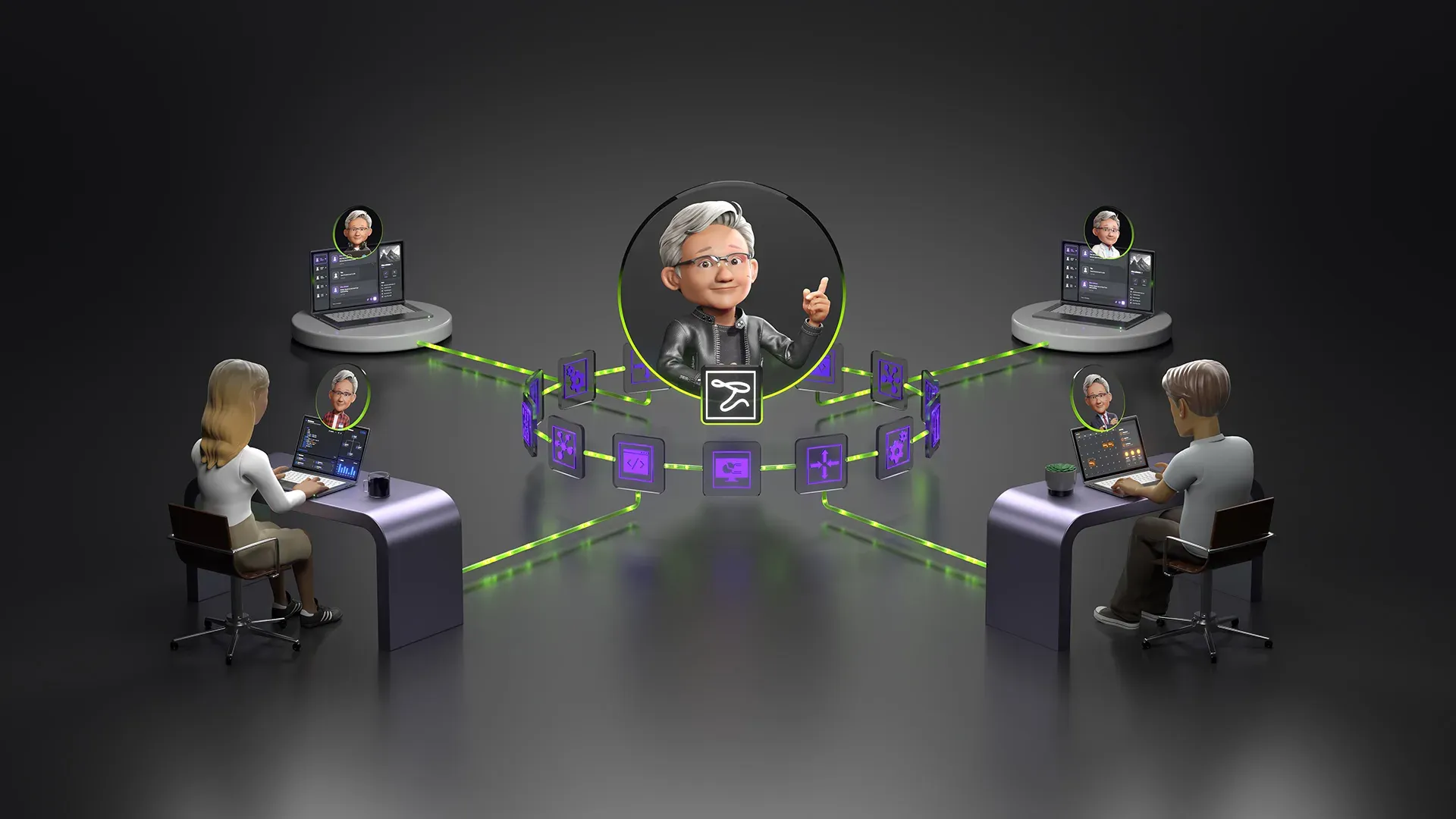
The most important part of NVIDIA’s latest agent demo is not the agent.
That sounds like a cheap trick, but it is the cleanest read on NVIDIA’s new developer walkthrough for running Nous Research’s Hermes Agent inside NemoClaw and OpenShell. The demo can read Outlook or Slack, inspect GitHub and NVIDIA forum data, generate recurring product/community research, and preserve learned workflows as reusable skills. Fine. Every serious agent demo now promises some version of “connect the tools, summarize the mess, save the human time.”
The part worth paying attention to is the plumbing NVIDIA chose to emphasize: sandboxed egress, credential brokering, read-only public-data mirrors, narrow inference allowlists, trace collection, and learned behavior stored as files rather than vibes. That is not keynote glamour. It is the difference between an autonomous assistant and a cheerful exfiltration bug with a model card.
NVIDIA’s example targets Ubuntu 24.04 with Docker and a build.nvidia.com API key. The default model is nvidia/nemotron-3-super-120b-a12b, though NVIDIA says Hermes can run against self-hosted Nemotron through NIM or vLLM when traffic needs to stay on-prem. The setup wires at least one live messaging channel — Outlook or Slack — plus GitHub and NVIDIA forum data. The critical detail: those sources are not handed to one unconstrained process and wished into safety by a system prompt.
The sandbox is doing the grown-up work
The bring-up.sh flow starts Hermes inside an OpenShell sandbox. OpenShell brokers credentials so Hermes does not directly see Slack or Outlook tokens; authentication happens as requests leave the sandbox proxy. Public GitHub and forum data are fetched by a separate ETL process, stored in Postgres, and exposed to the agent through a read-only bridge. That design choice matters because it treats data sources as different trust zones instead of flattening everything into “context.”
That is exactly where many agent systems quietly become dangerous. A product research agent is useful because it can combine private Slack, private email, public GitHub issues, forum posts, docs, and model inference. It is risky for the same reason. If an agent can read internal mail, browse arbitrary websites, and post or call APIs freely, prompt injection stops being an academic threat model and becomes Tuesday. A malicious issue comment, forum post, README, or email can try to persuade the agent to leak private context, request broader permissions, or route sensitive information to a hostile endpoint.
NVIDIA’s reference policy is narrow in a way practitioners should copy even if they never adopt this exact stack. The example authorizes only specific inference paths — POST /v1/chat/completions, POST /v1/embeddings, and GET /v1/models — on integrate.api.nvidia.com, and only for approved binaries such as /usr/local/bin/hermes and /usr/bin/python3. If the agent tries to reach a non-allowlisted host, the proxy returns HTTP 403 and Hermes treats it as a tool error. That is the right failure mode: boring, enforceable, logged, and not dependent on the model remembering to be virtuous.
OpenShell’s own README describes four policy domains: filesystem, network, process, and inference. Network and inference policies are hot-reloadable; filesystem and process controls are locked at sandbox creation. That split is a useful reminder that agent governance is not one permission dialog. Some controls need runtime adjustment as workflows evolve. Others need to be fixed before the process starts, because changing them dynamically is how “temporary exception” becomes “permanent breach surface.”
Learning should leave artifacts humans can review
The demo’s other good idea is almost aggressively unromantic: Hermes learns a recurring report format by writing a SKILL.md. Skills, memories, sessions, and scheduled jobs persist through snapshot and restore of /sandbox/.hermes-data/. Snapshot filtering excludes credential-looking files such as .env, *token*, and *secret*.
This is the kind of design that looks less impressive in a screenshot and better in production. “Self-evolving agent” is a loaded phrase; it can mean anything from a useful automation that stores a checklist to an opaque process quietly rewriting its own behavior. A skill file is not magic. That is the point. It can be diffed, copied, reviewed, pinned, reverted, and discussed in a pull request. Learned behavior that becomes versionable text is far easier to govern than learned behavior buried inside a memory blob nobody audits until something goes wrong.
For engineering teams, this suggests a practical rule: if an agent changes how it works, that change should produce an inspectable artifact. A new digest format, triage heuristic, escalation rule, data-source mapping, or tool-call sequence should show up as a file, config entry, trace, or policy update. If the only record is “the agent remembers,” the system is not mature enough for sensitive workflows.
NVIDIA is also pointing at the observability layer. The example emits Agent Trajectory Format traces, includes NeMo Relay in the sandbox image, and can stream traces to Arize Phoenix with PHOENIX_COLLECTOR_ENDPOINT. That matters because agent failures are rarely single bad completions. They are sequences: retrieve the wrong thing, trust the wrong source, call the wrong tool, summarize with false confidence, then schedule the same mistake for tomorrow. Traces let teams debug the chain instead of arguing with the last paragraph.
Copy the threat model before you copy the stack
The community signal is still thin. NVIDIA’s forum mirror had 15 views, one like, and two posts during the research window, with the second post hidden by the community. There was no meaningful Hacker News or Reddit discussion surfaced around the exact developer post. That is not a reason to dismiss it; infrastructure work often gets validated by bug reports and adoption friction, not launch-day applause. But it does mean nobody should treat this as battle-tested enterprise software because it has NVIDIA branding.
NVIDIA is explicit that OpenShell is alpha “single-player mode,” not a mature multi-tenant enterprise runtime. Good. That caveat is doing useful work. A single-developer sandbox for a research agent is not the same thing as a governed platform for many employees, many agents, many departments, many data classifications, and many external integrations. The jump from one to the other requires identity, tenancy boundaries, audit retention, policy review workflows, admin controls, incident response, secret rotation, data-loss prevention, and boring integration with the organization’s existing security stack.
Still, the reference architecture is valuable because it names the right questions. Which directories can the agent read and write? Which binaries can make network calls? Which HTTP methods and paths are allowed? Which credentials are brokered rather than exposed? Which sources are live and which are mirrored read-only? Where are traces stored? How is learned behavior snapshotted? What gets excluded from snapshots? What happens when the agent asks for a permission it does not have?
Those questions are more important than whether the agent is Hermes, OpenClaw, or something else. The useful practitioner move is to build a permission matrix before building a demo. Start with a constrained workflow: weekly community sentiment, internal support triage, issue clustering, documentation review, or release-note drafting. Give the agent read-only access wherever possible. Mirror public data into a controlled store. Broker credentials. Enforce egress at the runtime layer. Log every tool call. Store learned procedures as reviewable files. Then measure whether the work quality justifies expanding scope.
This is also where NVIDIA’s broader strategy becomes legible. NemoClaw supplies agent assembly patterns, OpenShell supplies policy and sandboxing, Nemotron supplies optimized model options, and NIM/vLLM provide deployment paths from cloud APIs to self-hosted inference. NVIDIA is not just trying to sell a model into the agent boom. It is trying to make agent execution look like accelerated infrastructure: governed, observable, portable, and preferably running on its hardware.
That is a more credible pitch than another “AI coworker” video. Long-running agents will not earn trust because they sound confident. They will earn it because their permissions are narrow, their actions are replayable, their learned behavior is inspectable, and their failures are contained. NVIDIA’s Hermes/NemoClaw example is early, alpha, and vendor-led. It is also pointed at the right layer.
The LGTM take: self-improving agents are only interesting if the improvement leaves a paper trail and the runtime can say no. Otherwise you did not build autonomy. You built an intern with root access and no badge logs.
Sources: NVIDIA Developer Blog, NVIDIA NemoClaw GitHub, NVIDIA OpenShell GitHub, Hermes Agent GitHub, NVIDIA Developer Forum