NVIDIA’s Agent Customization Playbook Is Really a Maturity Model for When Prompts Stop Being Enough

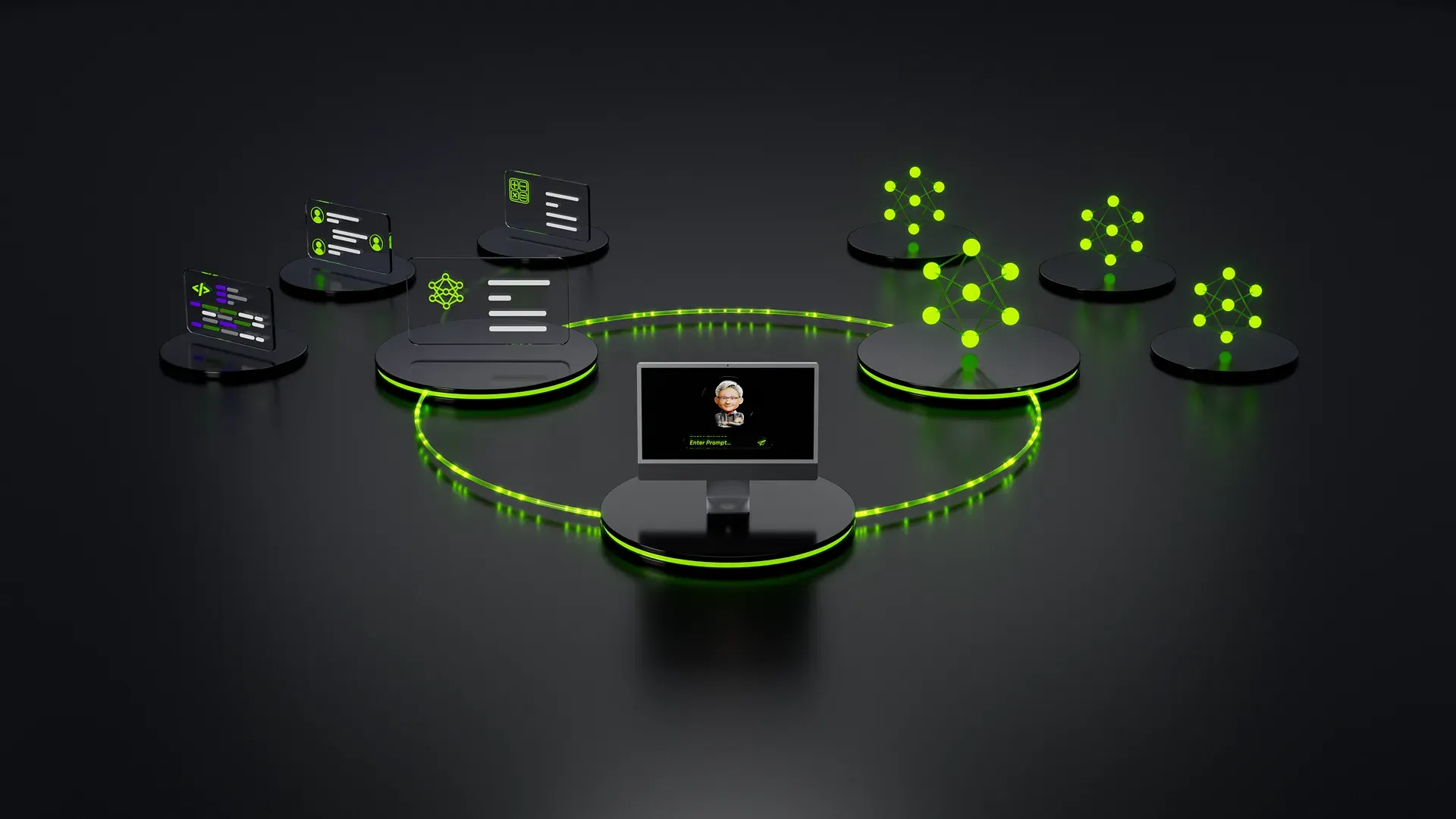
NVIDIA’s latest agent-customization post looks, at first pass, like another taxonomy of techniques: prompts, RAG, tools, skills, supervised fine-tuning, LoRA, preference tuning, reinforcement learning, distillation. Fine. Everyone building agents already has that pile of acronyms in a notebook somewhere.
The useful part is the sequencing. NVIDIA is effectively saying what many agent teams learn the expensive way: customization is not one move. It is a maturity ladder. The trick is knowing whether your agent is failing because it lacks information, lacks a capability, lacks a stable output habit, or lacks a verifiable training signal. Those are different problems. Treating all of them as “we need a better prompt” is how production agents become laminated prompt murals with a latency bill.
The post, Mastering Agentic Techniques: AI Agent Customization, frames customization as shaping how an agent reasons under constraints, selects tools, structures outputs, and executes domain workflows. That framing matters because an agent is not just a model response. It is a runtime system with context, tools, memory, policies, workflows, and often write access to things you would rather not debug at 2 a.m.
The failure mode should pick the intervention
NVIDIA’s most practical split is simple: does the agent need better information, better instructions, or fundamentally more reliable behavior? If the issue is stale or private knowledge, retrieval-augmented generation is the obvious first move. If the issue is access to external systems, add tools. If the issue is repeatable domain procedure, package that procedure as a skill. If the issue is consistent format or style across many examples, supervised fine-tuning or LoRA starts to make sense. If the output has an objectively checkable answer, reinforcement learning with verifiable rewards becomes interesting.
That is the decision tree teams should print before they buy training capacity. Prompt engineering remains the cheapest starting point, but NVIDIA is blunt about its ceiling: long prompts get brittle, model-dependent, and hard to maintain. RAG helps with current or proprietary knowledge, but it adds latency, depends on retrieval quality, and does not magically improve reasoning. Tool calling extends capability, but every callable function is also an authority grant. Skills add domain-specific workflow knowledge, but they become a new supply-chain surface.
The distinction between tools and skills is especially important. A tool is a callable function. A skill is a package of instructions, examples, scripts, templates, and workflow expectations. NVIDIA’s example incident-triage skill includes a SKILL.md, helper scripts, templates, examples, and a concrete process for collecting logs, parsing them, and producing a report. That is not “prompting.” That is lightweight operational software wrapped in markdown.
RLVR is where agent work starts looking like engineering again
The strongest practitioner hook is NVIDIA’s treatment of reinforcement learning with verifiable rewards. RLVR is useful when the task has a real correctness function: valid JSON, a correct API call, passing tests, a compileable patch, a matching CLI command, a SQL query that returns the expected rows. NVIDIA gives a reward sketch where an exact match earns +1.0, partial command/flag correctness earns partial credit, and wrong commands or invalid JSON receive -1.0.
That sounds dry because it is. Good. The agent industry could use more dry correctness and less judge-model astrology. Coding agents, in particular, are full of verifiable subtasks: generate a patch, run tests, satisfy a type checker, avoid forbidden paths, preserve public APIs, produce a valid diff, update docs, respect a tool schema. Those are not abstract alignment problems. They are software loops with machine-checkable outcomes.
NVIDIA also points to GRPO — group relative policy optimization — as a natural fit with RLVR. The model generates multiple completions per prompt, often 4 to 64, then normalizes rewards across the group rather than maintaining PPO’s critic network. The engineering implication is not “everyone should do GRPO next week.” It is that teams should start collecting verifier traces now. Today’s structured test results, schema validations, CLI outcomes, and tool-call audits are tomorrow’s training signal.
That is the original move hiding inside the taxonomy. If your agent platform cannot record what was attempted, which tools were called, what validators passed, what failed, and why, you are not just missing observability. You are throwing away the data needed to improve the system without vibes.
Adapters are cheaper than replacing the model, but not free
NVIDIA’s discussion of PEFT, LoRA, and QLoRA is the pragmatic middle path for teams that need specialization without owning frontier-scale training. The post names Nemotron 3 Nano as an example: 30B total parameters with roughly 3.5B active per forward pass. Adapters can specialize behavior without swapping the base model, which is exactly why multi-tenant agent systems will lean on them.
But adapters create governance debt. Which adapter is loaded for which user? Which data produced it? Which evaluation suite approved it? Is it pinned? Can it be rolled back? Does it affect tool selection, output format, refusal behavior, or only style? A customized agent can become an unreviewable pile of patches faster than a human team admits. Prompts, retrieval indexes, tools, skills, adapters, reward functions, and model routers all change behavior. If they are not versioned, reviewed, and tested, “customization” is just configuration sprawl with a GPU budget.
The security overlap is not optional. Tool and skill injection are capability grants. A log-collection skill can over-collect secrets. A RAG connector can leak private context. A weak verifier can reward shortcut behavior. A prompt update can silently loosen policy. The answer is not to avoid customization; it is to treat customization artifacts like code. Review them. Scan them. Pin them. Evaluate them. Log which ones were active during a run.
For engineering teams, the action item is almost annoyingly simple: write down the failure mode before changing the stack. “The agent hallucinated” is not a diagnosis. Was the fact missing? Did retrieval fail? Did the model choose the wrong tool? Did the schema break? Did it ignore a policy? Did it need domain style? Did it take too many steps? Map the failure to the cheapest intervention that directly addresses it, then measure the next run against the same task set.
NVIDIA’s playbook is not valuable because the techniques are new. They are not. It is valuable because it pushes teams away from magical escalation — prompt harder, retrieve more, fine-tune blindly, sprinkle RL on top — and toward engineering discipline. Context problems need context. Capability problems need tools. Format problems may need examples or fine-tuning. Correctness problems need verifiers. That is not glamorous. It is how agents stop being demos and start surviving production.
Sources: NVIDIA Developer Blog, NVIDIA NeMo Agent Toolkit docs, NVIDIA NeMo Gym, NVIDIA NeMo RL, NVIDIA AI-Q Blueprint