NVIDIA’s GPU Usage Monitor Is the Boring Kubernetes Tool AI Platforms Need

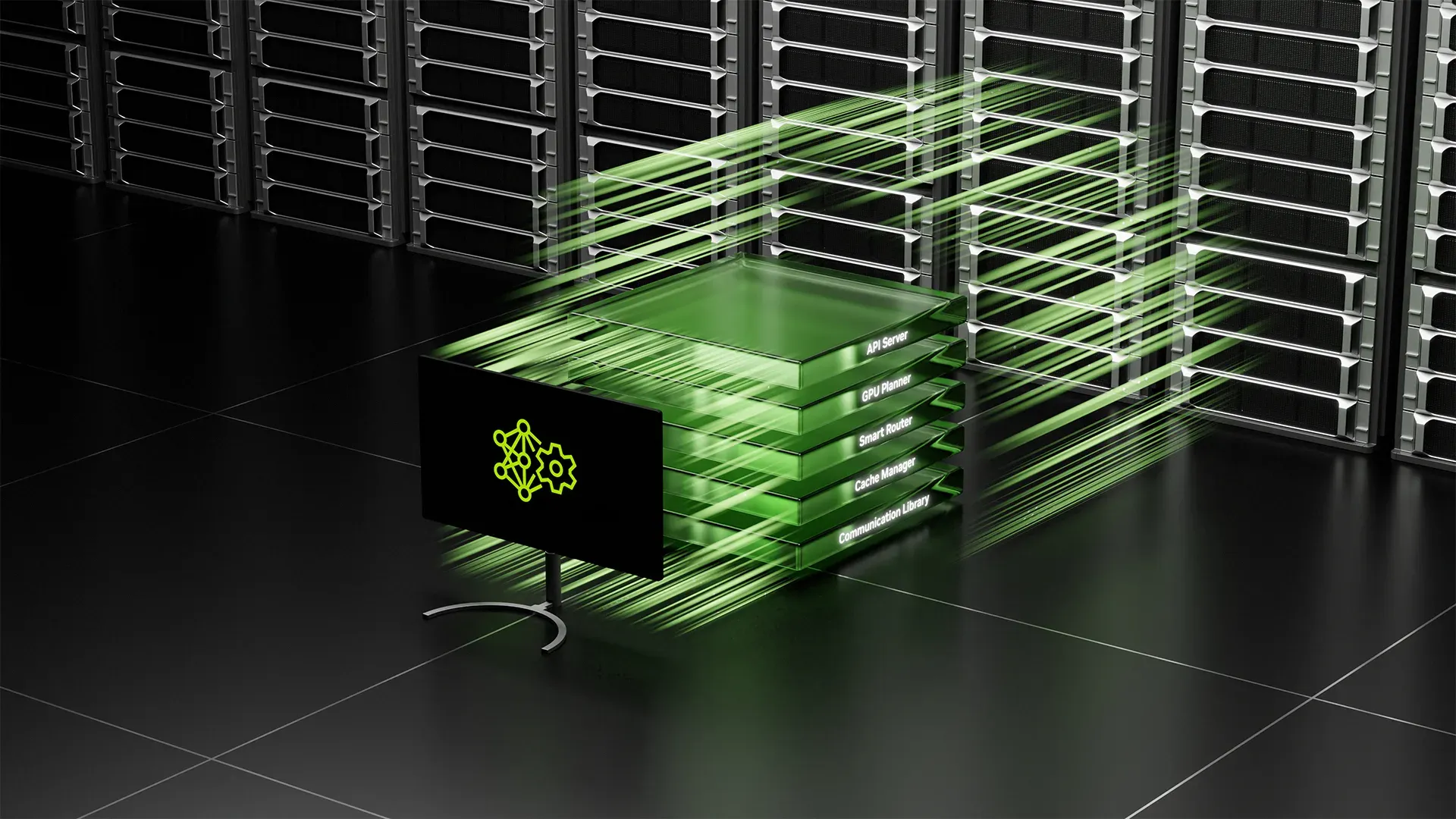
NVIDIA’s GPU Usage Monitor is not the kind of AI infrastructure release that gets a keynote clip. That is the point. The companies losing the most money on accelerators usually do not need a more poetic vision of artificial intelligence. They need to know which Kubernetes namespace is holding expensive GPUs hostage while doing almost nothing useful.
The new project packages DCGM Exporter, kube-state-metrics, Prometheus, and Grafana into a Helm chart for real-time GPU visibility across Kubernetes clusters. It tracks allocation, compute utilization, memory usage, running GPU pods, pending GPU pods, and GPU type filtering. In other words: the boring dashboard that should exist before anyone is allowed to say “we need more H100s” in a budget meeting.
NVIDIA calls out the two failure modes every AI platform team recognizes: over-provisioning and pod starvation. The post says models often use only 30-50% of available GPU memory and compute, while teams request whole GPUs to avoid contention. That mismatch is where a surprising amount of AI infrastructure spend goes to die. The cluster looks full. The accelerators are allocated. The work is not necessarily happening.
Allocation is not utilization
Standard Kubernetes observability does not answer the questions AI teams actually ask. CPU, memory, node readiness, and pod status are table stakes. GPU platforms need more specific telemetry: device memory, SM utilization, model residency, pending accelerator requests, MIG partitions, DCGM health, PCIe or NVLink issues, GPU type, and the difference between “a pod exists” and “a GPU is producing useful throughput.”
GPU Usage Monitor’s stack is intentionally familiar. DCGM Exporter exposes NVIDIA GPU metrics. kube-state-metrics reports Kubernetes resource state. Prometheus collects and stores time-series data. Grafana displays the dashboards. The prerequisites are Kubernetes 1.19+, Helm 3.0+, and DCGM Exporter running on GPU nodes. The quick-start path is short: update Helm dependencies, install the chart into a gpu-usage-monitor namespace, then port-forward Grafana on port 3000.
That packaging matters. Platform teams could wire this together manually, and many already have. But “could” is not an operating model. A Helm chart with prebuilt dashboards lowers the floor for smaller teams and gives larger teams a baseline vocabulary: allocation, utilization, memory, pending pods, GPU type. Shared vocabulary is underrated infrastructure. It is how a meeting moves from “training feels slow” to “namespace X has 14 allocated GPUs averaging under 20% utilization while namespace Y has pending pods for 90 minutes.”
The defaults also tell you what NVIDIA thinks matters. The README marks GPU utilization green above 80%, yellow from 50-80%, and red below 50%. Those thresholds are not universal truth. Latency-sensitive inference may intentionally run below peak utilization. Interactive notebooks are bursty. Evaluation jobs may spend time waiting on I/O or external services. But thresholds force the conversation out of folklore and into policy.
The first win is killing expensive mythology
Without GPU-level observability, every platform discussion becomes anecdotal. A research team says the cluster is full. Finance says the GPU bill is absurd. Engineers say pods are pending. Executives say buy more accelerators. Maybe that is right. Or maybe requests are too coarse. Maybe model memory, not compute, is the bottleneck. Maybe one team is hoarding idle allocations because giving them up means waiting in queue later. Maybe the scheduler is fragmenting capacity. Maybe node-level utilization looks acceptable but tokens per GPU-hour are terrible.
The monitor will not solve those problems by itself. A dashboard is not a scheduler, a quota policy, or a capacity planner. But it makes the waste legible. Once teams can compare requested GPUs to actual memory and compute usage, the next moves become concrete: right-size requests, consolidate workloads, batch inference, tune model serving, use MIG where appropriate, split interactive experimentation from production serving, and add alerts for pending GPU pods or sudden utilization cliffs.
For engineering managers, this is also a governance tool. GPU clusters turn into political systems quickly because accelerators are scarce, expensive, and tied to status. Observability gives platform teams a neutral record. Who requested what? Which workloads are waiting? Which jobs are using the hardware effectively? Which teams need reserved capacity because latency matters, and which are just over-requesting because there is no penalty for doing so?
There is a security footgun hiding in the install path. Grafana’s default credentials are admin / admin, and NVIDIA explicitly says to override them in values.yaml before broader rollout. That warning sounds small, but it is exactly the kind of detail that separates a useful internal dashboard from a new attack surface. GPU observability can expose workload names, tenant patterns, cluster topology, and operational behavior. Treat dashboard access like production telemetry, not a toy.
Measure before buying
The stronger trend is that AI infrastructure is becoming fragmented. Training runs, evaluation jobs, batch research loops, inference endpoints, developer sandboxes, and local-agent experiments all compete for accelerators. Some workloads need throughput. Some need latency. Some need memory. Some need topology. Some need bursty access for ten minutes and then disappear. A platform that only knows “GPUs allocated” is blind to the shape of demand.
The practical first step is simple: install the monitor in a non-production cluster or a limited namespace, compare allocation to actual utilization, and identify the obvious outliers. Look for workloads consistently below useful memory or compute thresholds. Then ask why before optimizing. Low utilization may be waste, but it may also be an intentional latency tradeoff or a symptom of upstream bottlenecks. The dashboard starts the investigation; it does not finish it.
NVIDIA’s release is valuable because it is anti-hype. Before buying more GPUs, measure the ones already installed. Before arguing about AI factories, install the gauge panel. The industry has enough grand strategy decks. It could use more red dashboards that tell the truth.
Sources: NVIDIA Developer Blog, NVIDIA/gpu-usage-monitor, NVIDIA DCGM Exporter, kube-state-metrics