RTX PRO 4500 Blackwell Shows Edge AI Hardware Is About Workflow Latency, Not Spec Sheets

The least interesting thing about NVIDIA’s RTX PRO 4500 Blackwell benchmarks is that a newer GPU beats an older one. That is not news; that is gravity. The useful story is what kind of workload NVIDIA chose to benchmark: genomics, variant calling, protein-structure inference, and Smith-Waterman alignment. This is a post about workflow latency, not spec-sheet theater.
NVIDIA is positioning the RTX PRO 4500 Blackwell Server Edition as a compact, energy-efficient Blackwell GPU for cloud, data-center, and edge deployments. In healthcare and life sciences, that form factor matters. The bottleneck is often not whether a central cluster can run a workload eventually. It is whether analysis can happen close enough to the instrument, hospital, lab, or decision point to change the operational loop.
Minutes-to-results beats another peak-FLOPS slide
The Parabricks v4.7 numbers are the cleanest place to start. NVIDIA compared two RTX PRO 4500 GPUs against two NVIDIA L4 GPUs on core genomics workflows. Minimap2 ran in 15.8 minutes on RTX PRO 4500 versus 30.1 minutes on L4. fq2bam ran in 13.4 minutes versus 32.5 minutes. DeepVariant short-read variant calling ran in 7.5 minutes versus 15.0 minutes.
That is roughly 2x faster for Minimap2 and DeepVariant, and 2.4x faster for fq2bam. The benchmarks used 30x whole-genome Illumina data for DeepVariant and fq2bam, and 35x whole-genome PacBio data for Minimap2. NVIDIA gives the usual and necessary warning: results vary with dataset, GPU instance, host CPU, memory, and other factors.
The warning is not legal filler. Genomics pipelines are brutally sensitive to the surrounding system. Storage throughput, reference choice, read length, coverage, CPU staging, container configuration, workflow scheduler behavior, and QC steps can all eat into the clean benchmark story. If a team buys GPUs off a chart and never measures the whole pipeline, it deserves the surprise bill.
Still, the direction is meaningful. In sequencing workflows, generating data has become easier than acting on it quickly. If basecalling, alignment, variant calling, and reporting queue behind underpowered analysis infrastructure, the system bottleneck simply moves downstream. Faster GPU-accelerated analysis changes the cadence: less waiting, more iteration, and potentially more situations where results arrive while they are still operationally useful.
PacBio’s Armin Töpfer is quoted saying the RTX PRO 4500 Blackwell delivers “more than a 2x improvement in basecalling throughput over the L4 GPU” with a power and size profile that changes where sequencing analysis can happen. That is the important sentence. Not because vendor quotes are sacred — they are not — but because placement is the product. A workload that fits in a smaller power envelope can move closer to the data. In healthcare, that can mean less data movement, tighter privacy boundaries, and shorter loops between sample, analysis, and interpretation.
Protein folding is an iteration-speed problem
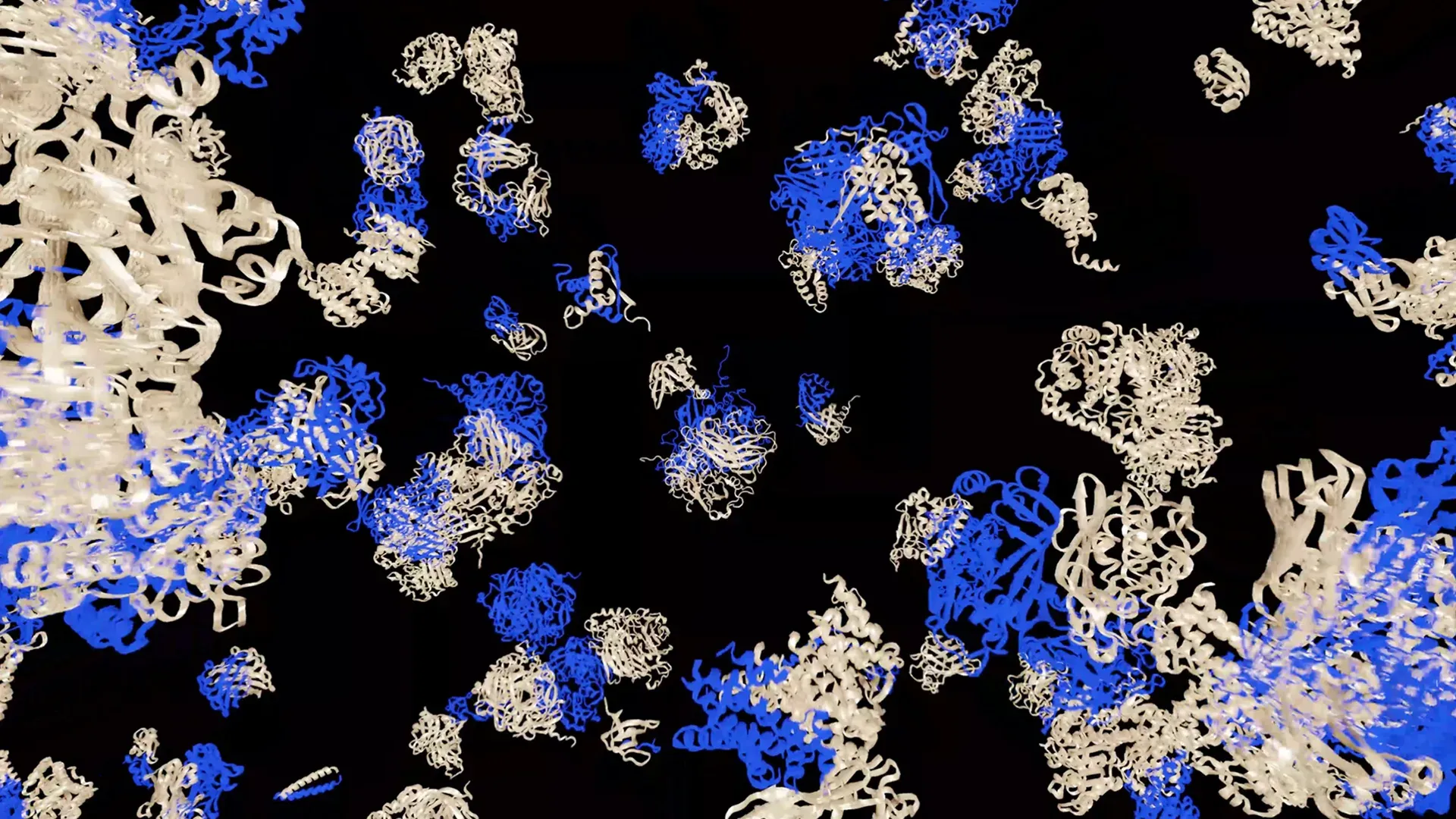
The OpenFold3 plus cuEquivariance results tell the same story in a different domain. NVIDIA reports approximately 2.3x to 2.4x speedups on one RTX PRO 4500 compared with L4 across tested protein sizes. A 256-amino-acid case dropped from 19.91 seconds to 8.71 seconds. A 512-amino-acid case went from 59.42 seconds to 25.68 seconds. A 1024-amino-acid case went from 198.90 seconds to 84.80 seconds. A 1536-amino-acid case went from 453.47 seconds to 194.28 seconds.
Those numbers do not magically solve drug discovery, and anyone implying otherwise should be sent to write tests until they calm down. But they do change the rhythm of structural-biology work. Teams screening candidates, testing hypotheses, or integrating structure predictions into experimental planning care about iteration time. Cutting a large inference from roughly seven and a half minutes to a little over three minutes is not just a benchmark delta; it changes how often a scientist or engineer can stay in the loop.
The compact server angle matters here too. Centralized accelerators are useful, but scarce shared capacity creates social queues: who gets access, when jobs run, which experiments are worth submitting, and how much friction attaches to each idea. More deployable Blackwell-class hardware does not eliminate those constraints, but it can move serious inference closer to smaller teams and regional sites that cannot treat an H100 cluster as table stakes.
DPX is the reminder that not everything is a transformer
The Smith-Waterman result is the most technically clarifying benchmark in the post. NVIDIA reports 256 GCUPS for a CPU baseline, 524 GCUPS for NVIDIA L4, and 4,923 GCUPS for RTX PRO 4500 Blackwell Server Edition. That is 19.2x over CPU and 9.6x over L4. NVIDIA also says the RTX PRO 4500 has up to 4.3x lower power consumption than H100 SXM while delivering comparable performance for this workload.
Smith-Waterman is a classic dynamic-programming alignment algorithm. It is not the shiny transformer workload everyone wants to slap into an AI deck. That is why it is useful. Blackwell’s DPX instructions accelerate a class of domain-specific computation that still matters deeply in bioinformatics. Hardware features only count when the software stack exposes them in tools people already use, and this is the sort of acceleration that can survive contact with real pipelines.
For practitioners, the action item is boring and correct: benchmark the entire workflow. NVIDIA includes runnable Parabricks Docker commands using nvcr.io/nvidia/clara/clara-parabricks:4.7.0-1 for pbrun minimap2, pbrun fq2bam, and pbrun deepvariant. Use them as a starting point, not a procurement oracle. Run your own data, references, coverage profiles, storage paths, host CPUs, container settings, and scheduler configuration. Measure ingest, basecalling, alignment, variant calling, QC, reporting, and human review.
Also measure the non-GPU constraints. Clinical validation does not become easier because a kernel is faster. Data governance, auditability, reproducibility, model versioning, regulatory boundaries, and interpretation workflows still decide whether faster output is deployable output. The GPU can shorten the loop; it cannot certify the loop.
The broader hardware lesson extends beyond genomics. Edge AI is often framed as a model-size story: what fits, how many parameters, how much VRAM. This post argues for a more useful framing: what workflow becomes local enough to change the operating model? In life sciences, that might be near-instrument analysis, hospital-local pipelines, regional research deployments, or protein-design loops that no longer wait on a central queue.
RTX PRO 4500 Blackwell is not interesting because it wins a chart against L4. It is interesting because NVIDIA is packaging Blackwell acceleration into a power and size envelope aimed at workloads where locality, latency, and repeatability matter. That is the right direction. The future of accelerated science will not be decided only by the largest clusters. It will also be decided by whether serious workflows can move closer to the people and instruments producing the data.
Sources: NVIDIA Developer Blog, NVIDIA Parabricks documentation, RTX PRO 4500 Blackwell Server Edition, OpenFold3, NVIDIA cuEquivariance