Windows Agents Need Sandboxes Before They Need Better Demos

Personal AI agents on Windows do not need better vibes. They need a threat model.
That is the useful read on NVIDIA and Microsoft’s new Windows agent stack. The announcement has plenty of expected AI PC ingredients: RTX Spark hardware, 1 petaflop claims, 128GB of unified memory, NemoClaw, Hermes Agent, llama.cpp and vLLM speedups, TensorRT for RTX, Windows ML, and the usual promise that developers can run bigger models locally instead of paying for every cloud call. Fine. Hardware matters. But the part worth underlining is Microsoft eXecution Containers, or MXC, with NVIDIA OpenShell coming to Windows on top of it.
If personal agents are going to touch files, native apps, browsers, terminals, screenshots, IDEs, credentials, and corporate documents, the platform has to assume the agent will eventually be tricked. Prompt injection is not an edge case when the agent reads untrusted web pages, emails, documents, repo issues, PDFs, and chat logs as part of its job. It is the default operating condition. So the question is not whether the model is “smart enough” to avoid trouble. The question is whether the runtime can keep a useful-but-confused agent from walking through the whole filesystem with a clipboard full of secrets.
The interesting feature is containment, not another assistant window
NVIDIA describes MXC as a set of Windows security primitives for agents that need to execute code, operate on files, and orchestrate tasks across systems with identity and policy enforcement. OpenShell, NVIDIA’s runtime for autonomous agents, is being adapted to Windows on top of MXC, adding policy creation and management, inference routing, and personally identifiable information obfuscation. OpenClaw and Nous Research’s Hermes Agent are named as apps looking to use MXC and OpenShell in Windows applications.
That is the right architecture shape. Local agents are often sold as safer because they run on your machine instead of a cloud endpoint. That is only half true. Local execution can improve privacy and latency, but it also puts the agent closer to the user’s real blast radius: private files, SSH keys, tokens, browser sessions, customer documents, source code, build scripts, and native apps with side effects. A cloud chatbot hallucinating a shell command is annoying. A desktop agent running that command in the wrong repo is operationally expensive. A desktop agent quietly reading the wrong directory because an HTML page told it to is worse.
For developers, the practical standard should be boring and strict: scoped filesystem access, explicit network policy, process restrictions, auditable tool calls, inference-routing logs, and human approval for irreversible actions. If MXC and OpenShell make those policies first-class on Windows, that matters more than whether the assistant UI has a slick tray icon. The local agent era will be won by runtimes that can say “no” predictably.
RTX Spark turns the PC into a deployment tier
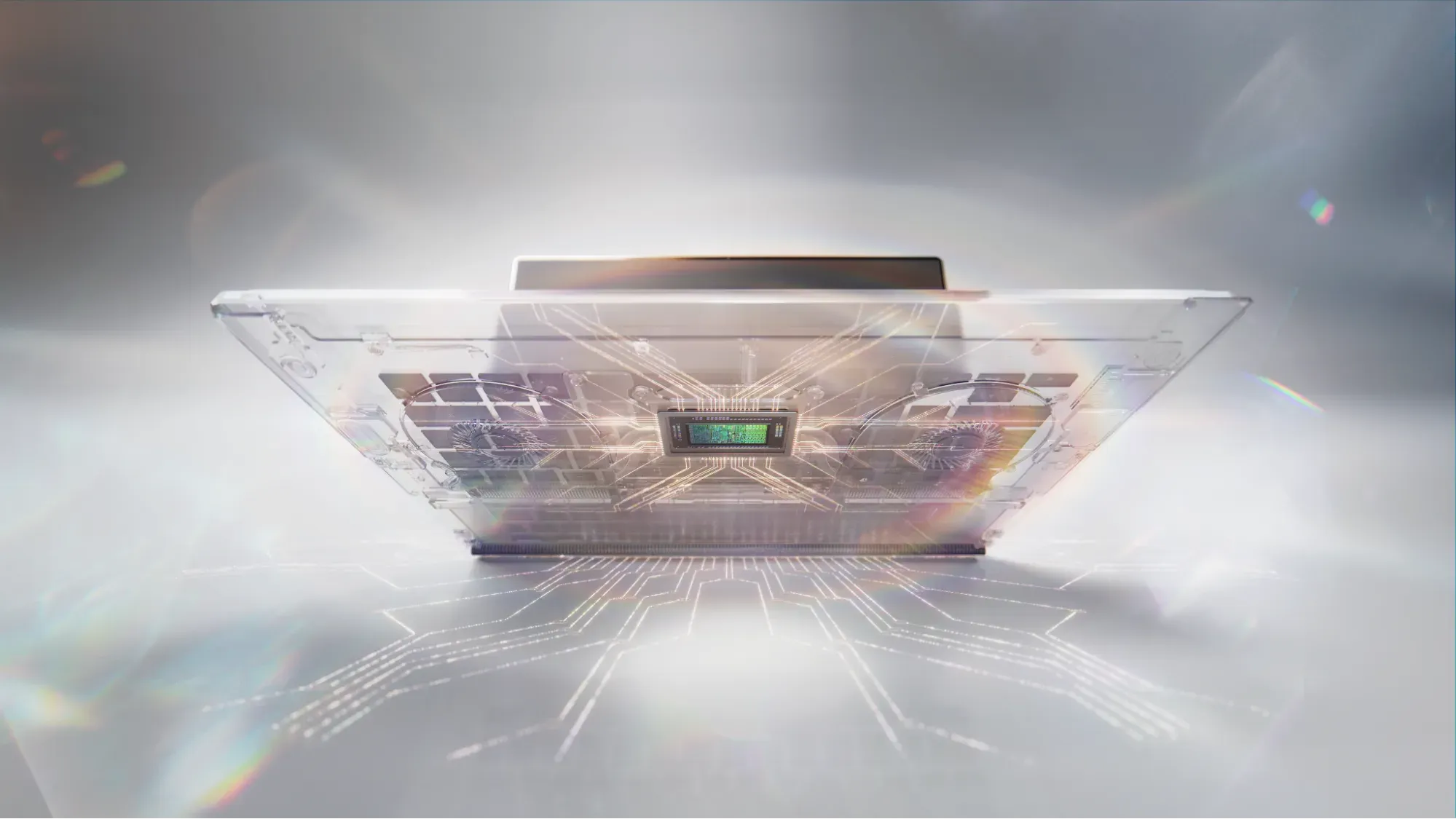
The hardware story is still consequential. NVIDIA says RTX Spark systems deliver up to 1 petaflop of AI performance, up to 128GB of memory, and CUDA-accelerated frameworks for running large models alongside everyday work. Microsoft’s Surface RTX Spark Dev Box adds the Windows distribution layer: a compact developer PC with an NVIDIA RTX Spark superchip, Windows 11 Pro configured for developers, WSL 2 GPU passthrough and CUDA support, VS Code, GitHub Copilot, Git, Python, Node.js, Windows ML with TensorRT, Windows Copilot Runtime, AI Toolkit for VS Code, and Microsoft Foundry integration.
Microsoft says the box can run 120B-plus-parameter models with a 1-million-token context locally at interactive speeds, based on NVIDIA’s FP4 TOPS framing. Treat that as a marketing claim until measured on your workload, but do not ignore the direction. A 128GB local machine with CUDA, WSL, Windows ML, and a normal developer toolchain is not just an “AI PC.” It is a plausible local inference tier. That changes how teams should think about agent architecture.
Today, many agent systems default to cloud inference for everything because it is easy. That makes every long-running workflow a token-metered operational expense. Local inference gives teams a second option: run repetitive, private, latency-sensitive, or medium-reasoning tasks locally, then escalate only the genuinely hard parts to frontier cloud models. Code search, repo summarization, document review, UI automation, log triage, test generation, and routine refactoring are exactly the kinds of workloads where cloud-only economics can get silly fast.
The mistake would be treating local as a universal replacement. It is not. A local Qwen or Phi-class setup may be perfect for constrained workflows and terrible for ambiguous architecture decisions. The sane implementation is hybrid: local models for cheap iteration and sensitive context, cloud models for high-stakes reasoning, and a routing layer that records why each call went where. OpenShell’s inference-routing angle is important because cost control without observability becomes folklore.
Benchmarks need to look like agent work, not chat demos
NVIDIA’s performance details are concrete enough to matter. The company says llama.cpp now delivers 2x performance on Qwen 3.5 and 3.6 27B dense models and 1.6x performance on Qwen 3.5 and 3.6 35B mixture-of-experts models, using Multi-Token Prediction and Programmatic Dependent Launch. vLLM is getting a claimed 2.6x inference improvement through better BF16 MoE kernel selection and lower runtime overhead via CUDA Graphs. On multi-GPU RTX PCs, llama.cpp tensor parallelism can provide up to roughly 2x memory capacity and 1.8x compute, while ComfyUI can use classifier-free guidance for up to 2x compute across two GPUs.
Useful, but builders should benchmark agent workflows, not clean chat throughput. Agent workloads include long system prompts, tool schemas, repo context, repeated tool calls, retries, screenshots, structured outputs, and small-batch latency. Track time to first token, total task time, context-window pressure, memory headroom, tool-call failure rate, approval interruptions, and completed-workflow cost. Tokens per second is one metric. “Did the agent actually finish the task safely?” is the metric that ships.
H Company’s Holo 3.1 computer-use models make the point. NVIDIA says H Company’s new models and harness deliver over 2x performance on NVIDIA GPUs, with 35% lower memory than FP8, and the research brief notes a reported step-time reduction from 6.8 seconds to 3.3 seconds in a computer-use harness. That is the kind of number agent builders should care about because computer-use agents fail in the gaps between actions: waiting for UI state, clicking the wrong thing, losing context, or timing out. Faster inference helps, but only if the harness also verifies state and recovers from bad actions.
Windows ML and TensorRT for RTX widen the adoption path. NVIDIA says Windows AI Foundry and Windows AI APIs are now GPU-accelerated on RTX hardware, with Phi-Silica, a 3.3B small language model, as the first supported model. Partner examples include Voicemod reporting 42% faster real-time voice conversion and Topaz reporting 20% faster 1080p-to-4K upscaling with 3–4x lower engine storage after moving from DirectML. Those are not agent benchmarks, but they show the local Windows AI stack is becoming an application runtime, not just a developer toy.
The near-term advice is simple. If you build Windows agents, design around containment before capability. Start with narrow file scopes, no ambient network access, structured logs, explicit approval gates, and a real rollback story. If you buy RTX Spark-class hardware, benchmark your actual agent loop before promising local-first economics. And if you are shipping AI into a Windows app, treat local inference as a deployment target with observability, not as a checkbox for the launch blog.
The AI PC label is still too broad to be useful. But a Windows machine that can run serious local models, route inference intelligently, and constrain agent side effects is a real platform shift. The approval is conditional: LGTM on the security-first architecture, pending evidence that MXC/OpenShell policies are easy enough for normal developers to use correctly.
Sources: NVIDIA Developer Blog, Microsoft Surface RTX Spark Dev Box announcement, NVIDIA OpenShell, llama.cpp multi-GPU documentation